




Product Details
Airwave
Mustang
PAST MODEL
Designed for adventure.
What exactly does this mean?
We wanted a glider long lasting, rugged, yet lightweight.
We wanted very good glide performance and an excellent sink rate so as to be able to perform well enough to fly out of inhospitable terrain. This is actually a safety feature that is rarely discussed!
The kind of agility that makes the wing a pure pleasure to fly.
FR Pedigree.
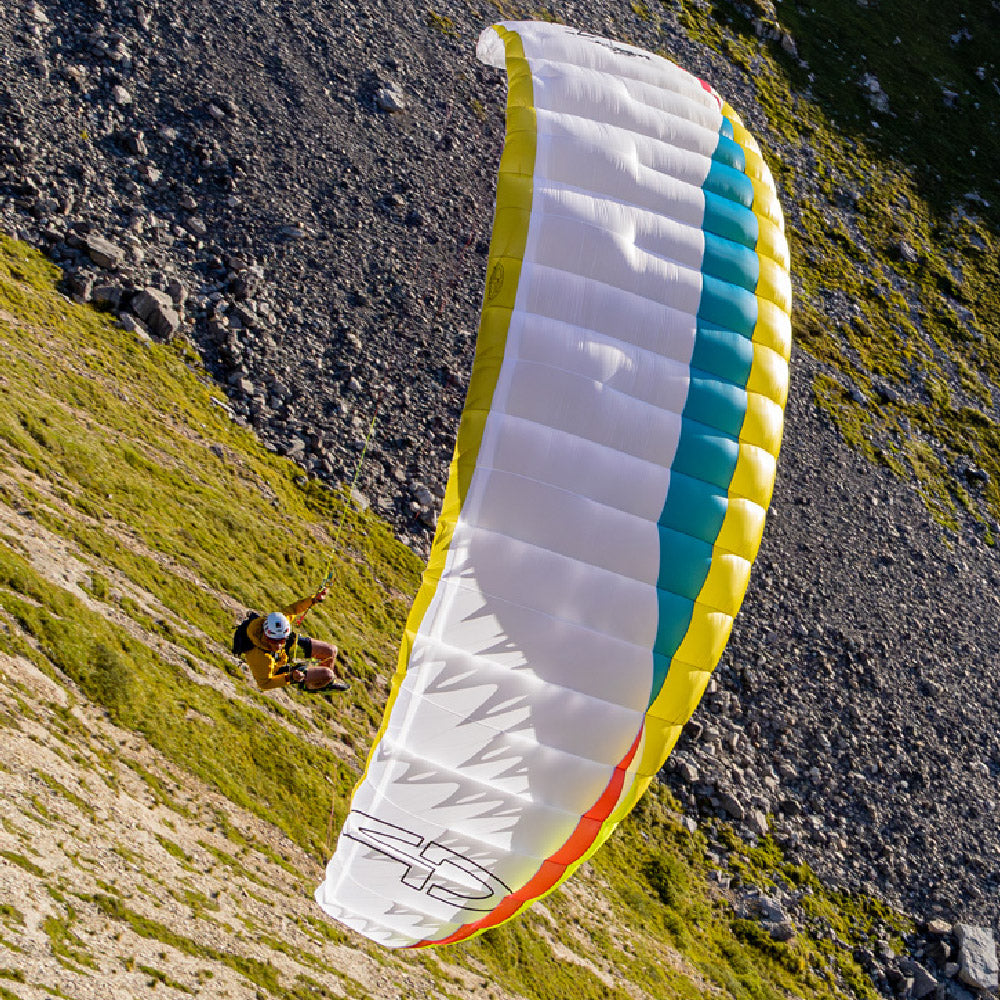
Much of the design of the Mustang has been directly handed down from Airwave’s very successful competition glider, the Magic FR. The internal structure is very similar, using the well tried and tested tri-cell diagonal system. The spanwise tension is also carefully controlled with horizontal bands on the trailing edge on the bottom surface as well as internal bands on the unsupported cells close to the top surface to help reduce unwanted wobbliness or movement within the wing. These are all features directly handed down from the Magic FR. The Mustang is constructed from an incredible 586 separate pieces of ripstop nylon66 high tenacity cloth, each piece being a different shape carefully designed using Airwave’s exclusive CAD system. This number of panels excludes all the reinforcing patches, webbing and tabs so you can see the complexity and attention to detail that has been involved in the design of the Mustang. Optimisation of the sail cut, windtunnel tests, the aerodynamic profile an aspect ratio of 5.8 and minimal line length are all performance refinements that have led to the impressive glide performance of the Mustang, with a trim speed glide performance close to 9:1, and with a surprisingly flat polar for a wing of this class.
The Hyrid Top Surface.
When a glider ages, it is the leading edge of the top surface that ages faster than any other part of the wing. This is because of two reasons. Firstly it is this place that receives twice the UV exposure compared to other surfaces of the wing. The bottom surface gets exposed to the sun when the glider is laid out on the ground. The top surface gets exposed to UV in flight, only the top surface close to the leading edge where the open is actually gets exposed to UV in both situations. This is one reason why it gets worn out quicker. The other reason that the leading edge of the top surface gets worn out faster than the rest of the wing is that the there is the most tension in this area, and also the biggest pressure difference across the cloth caused by aerodynamic forces which also contributes to the wear of the cloth in this zone. Gelvenor cloth has proven its self to be one of the very best cloths for long life. This is because it is silicon coated, and is also heavier than most other cloths used to make paragliders, weighing in at a heafty 50gm/sq m. It is not suprising that Gelvenor has gained an excellent reputation for long life in the paragliding industry. However the increased weight of Gelvenor means that the glider becomes heavier, leading to more inertia in the wing and sluggish launch characteristics, not to mention that fact that you have to carry that extra weight around on your back as well. For the last 18 months we have been testing the concept of mixing cloths on the top surface, putting Gelvenor on the first stripe of the leading edge and 39 gm/m, Porcher 9017 E38A on the rest of the top surface. The objective was to make a glider that lasts just as long as a 100% Gelvenor wing, but with the lighter overall weight. The result is the Hybrid top surface. The Mustang M weights in at a mere 5.6kg, approaching the weight of a mountain glider, but with a sail that is without compromise in terms of life expectancy or due to its innovative hybrid design.
Progressive Closed Cells.
All gliders have closed cells. Gliders that are commonly regarded as open cell gliders, usually have a few fully closed cells in the tip, and then a sudden jump to the central section of 100% open cells for the rest of the wing. The Mustang has a progressive system where the tip is fully closed as usual and then as you move towards the centre of the wing there are progressively more and more open cells until you reach the fully open section in the centre. We believe this is the most aerodynamically elegant solution to the open/closed cell question, giving just the right amount of air circulation, excellent inflation and enhanced performance.
"Goldsmith" Handling.
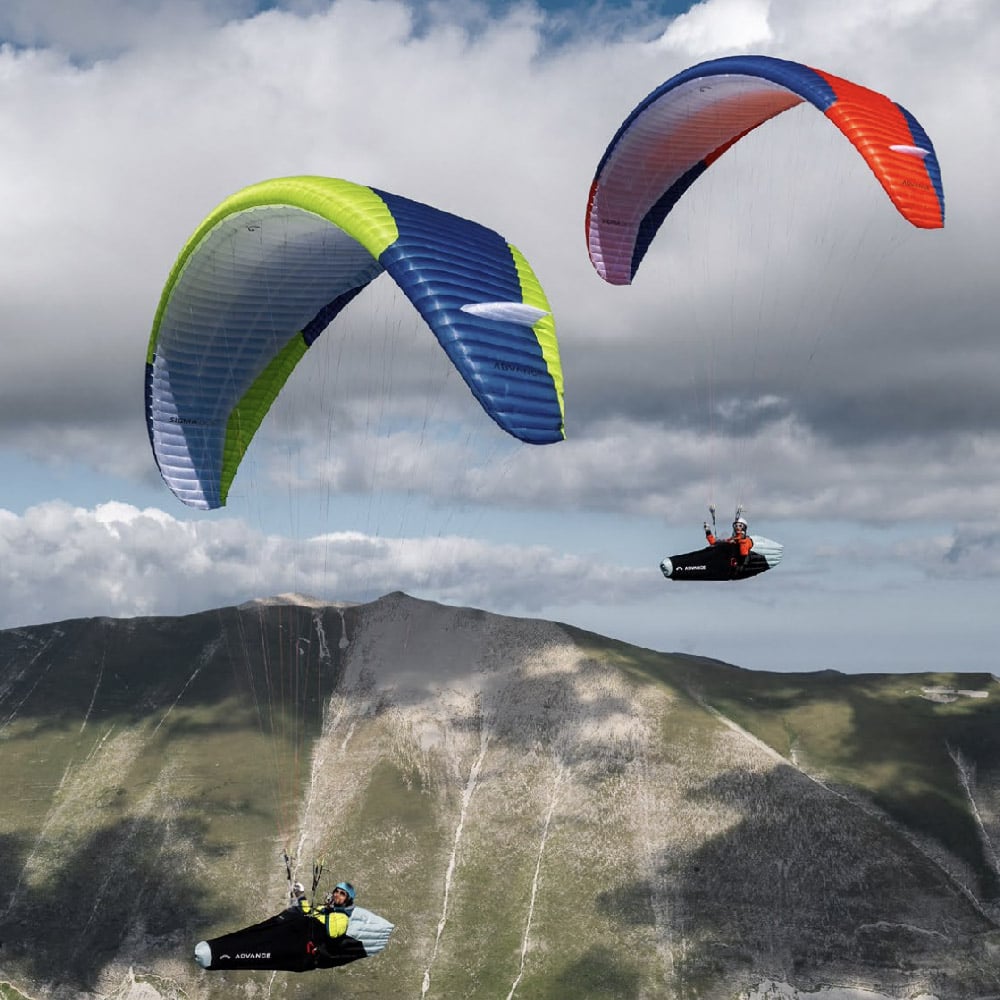
The handling of the Mustang is quite remarkable. The wing reacts so well to weightshift that you barley need to touch the brakes to swing it into a nicely coordinated turn, making the Mustang great for aerobatics. Every day I flew the final version of the mustang there was one sentence that I could not get out of my head ‘I think therefore I turn’ Thermalling the Mustang is where it really excels though. The Mustang has that lovely tendency to self-centre in the thermal, and it is simple to adjust your bank angle to match exactly the size of your thermal.
The New Reference.
The combination of performance, handling and safety and the innovative hybrid sail design mean the Mustang is set to become the new reference in its class.
Size & Weight Ranges
| Size | All-Up Weight Range |
| Mustang Small | 65-85 Kg |
| Mustang Medium | 80-100 Kg |
| Mustang Large | 95-120 Kg |
| Mustang XL | 115-140 Kg |
Mustang XS and XXL have only been Load Tested. They are not certified.
Mustang Small, Medium, Large have DHV 2 certification.
Mustang Small, Medium, Large and XL have DULV certification.
Airwave recommend: "to fly the Mustang in the middle of the weight range for the best performance".
Standard Colours
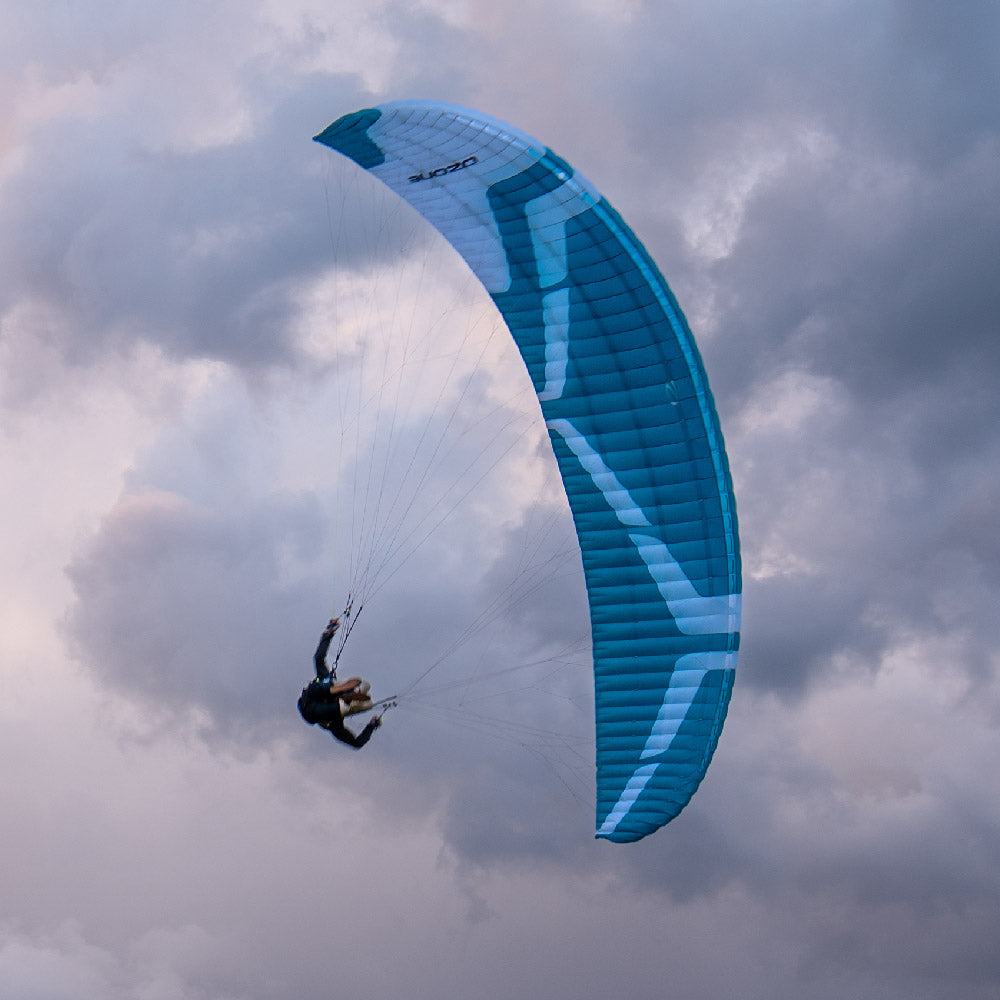
Blue-White
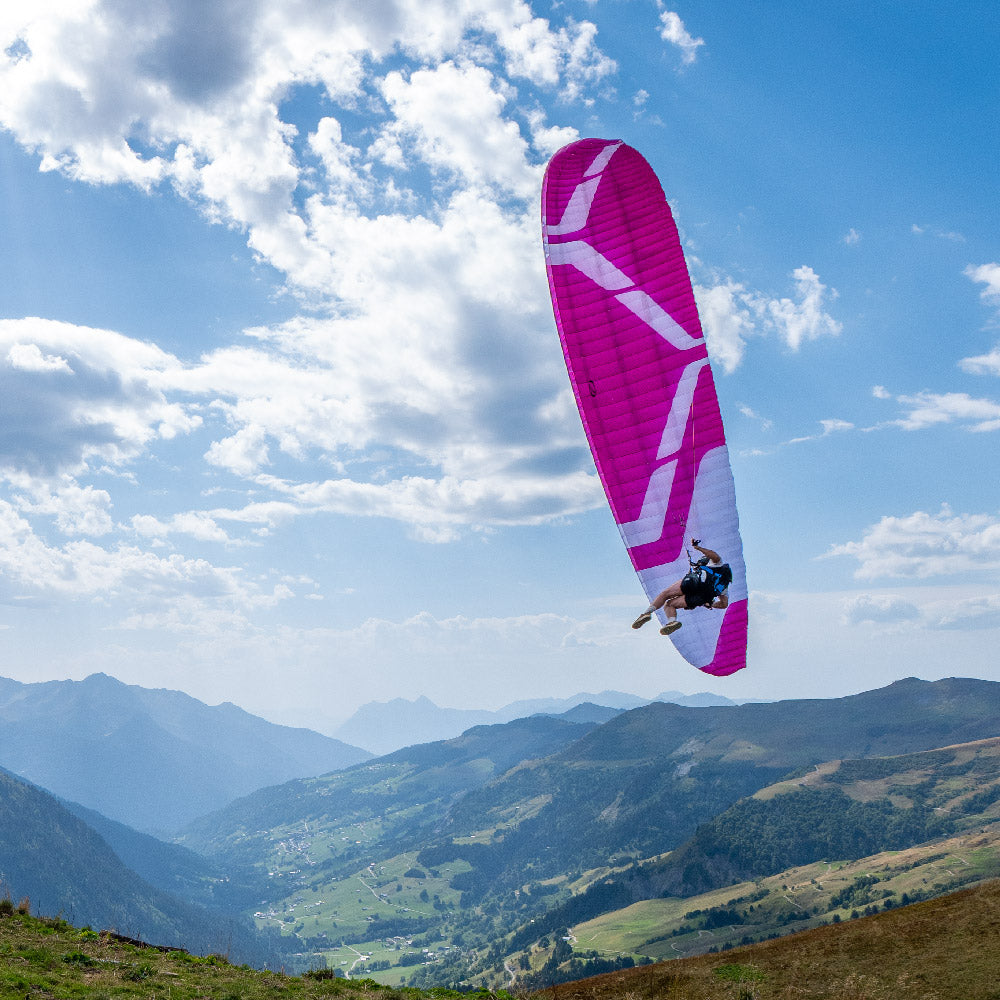
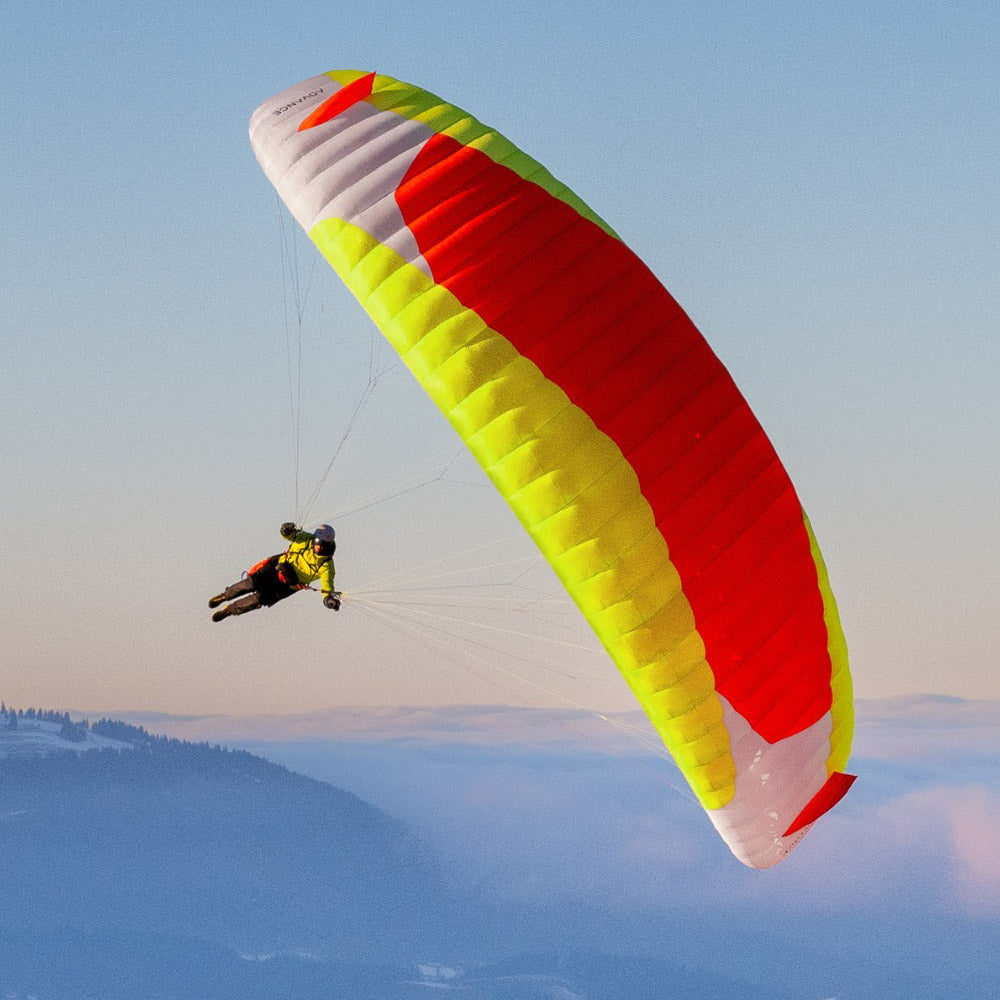
Orange-Red-White
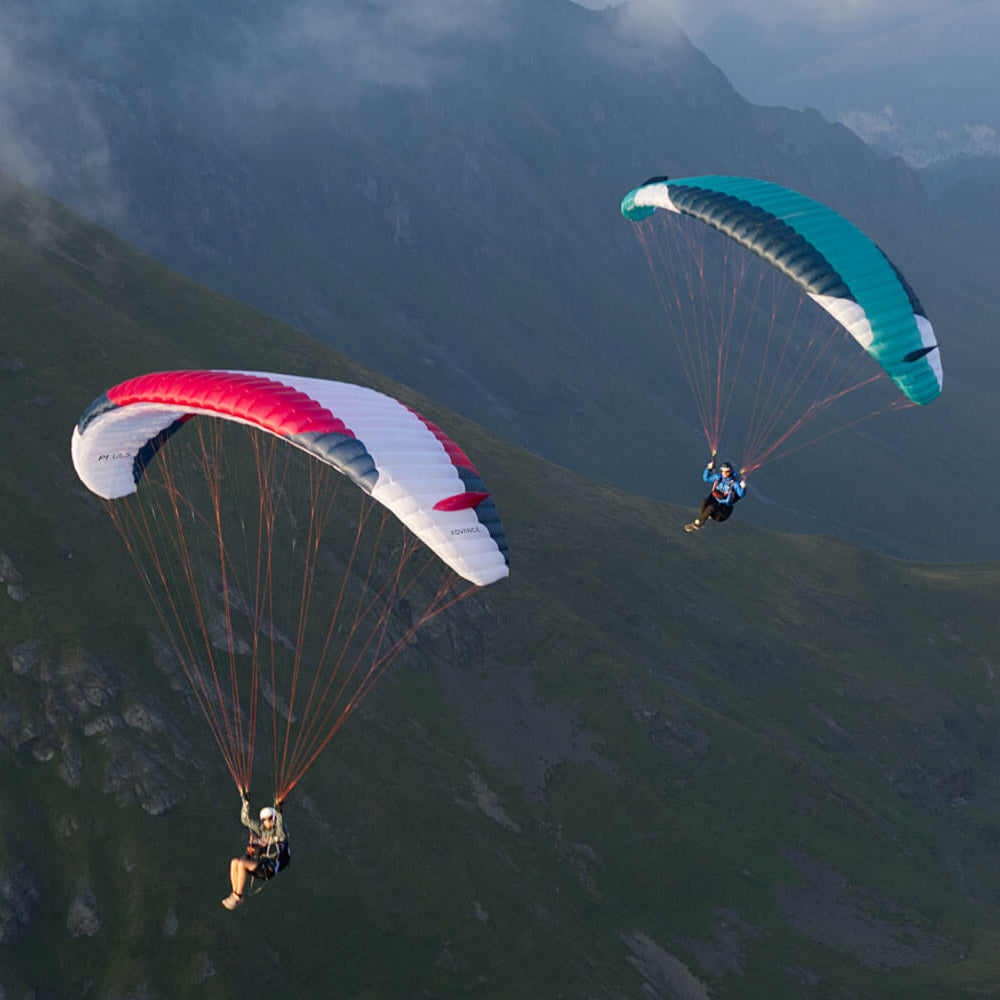
Red-White-Blue
Custom Colours
Choose your own custom colours on the Airwave website.
There's no additional cost for this but delivery time is quoted by Airwave as being 6-7 weeks.
Once you have decided which Custom Colours you want, you must remember to make a note of this and include these details with your order.
What Our Customers Think
Related Products