
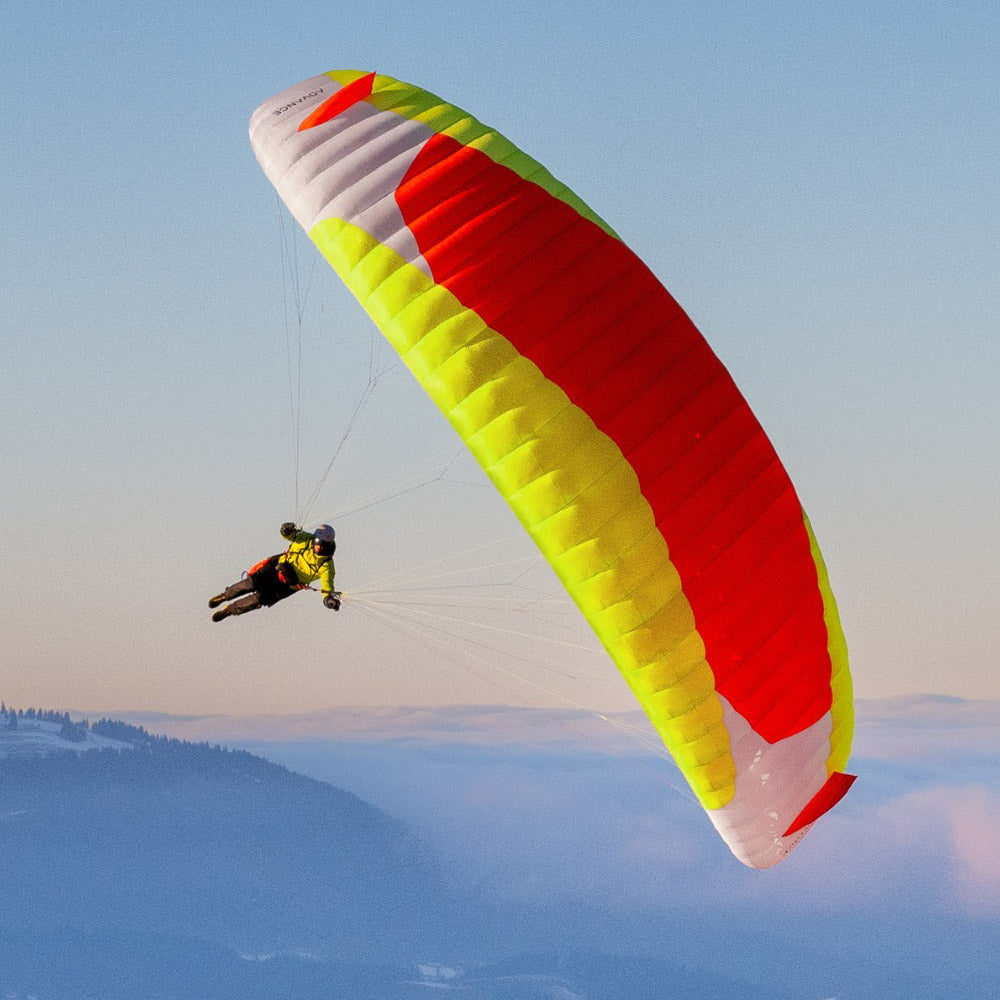


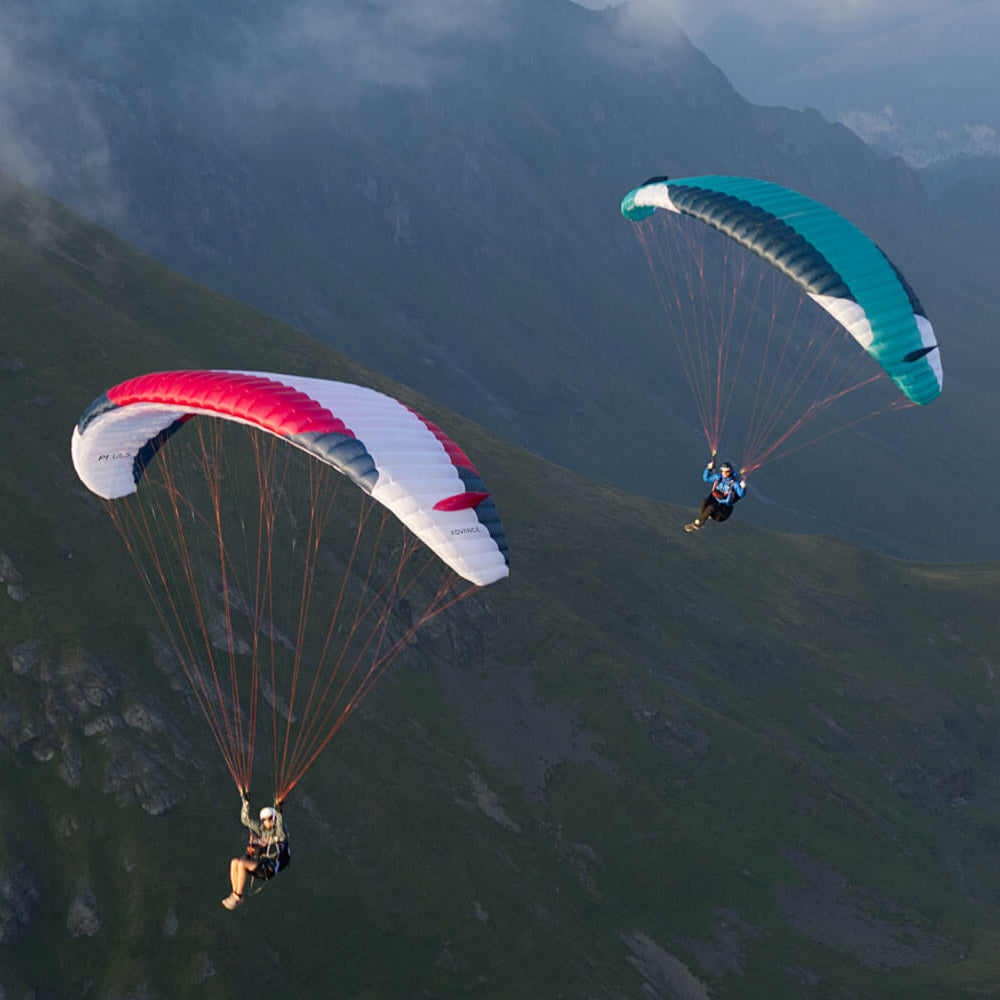
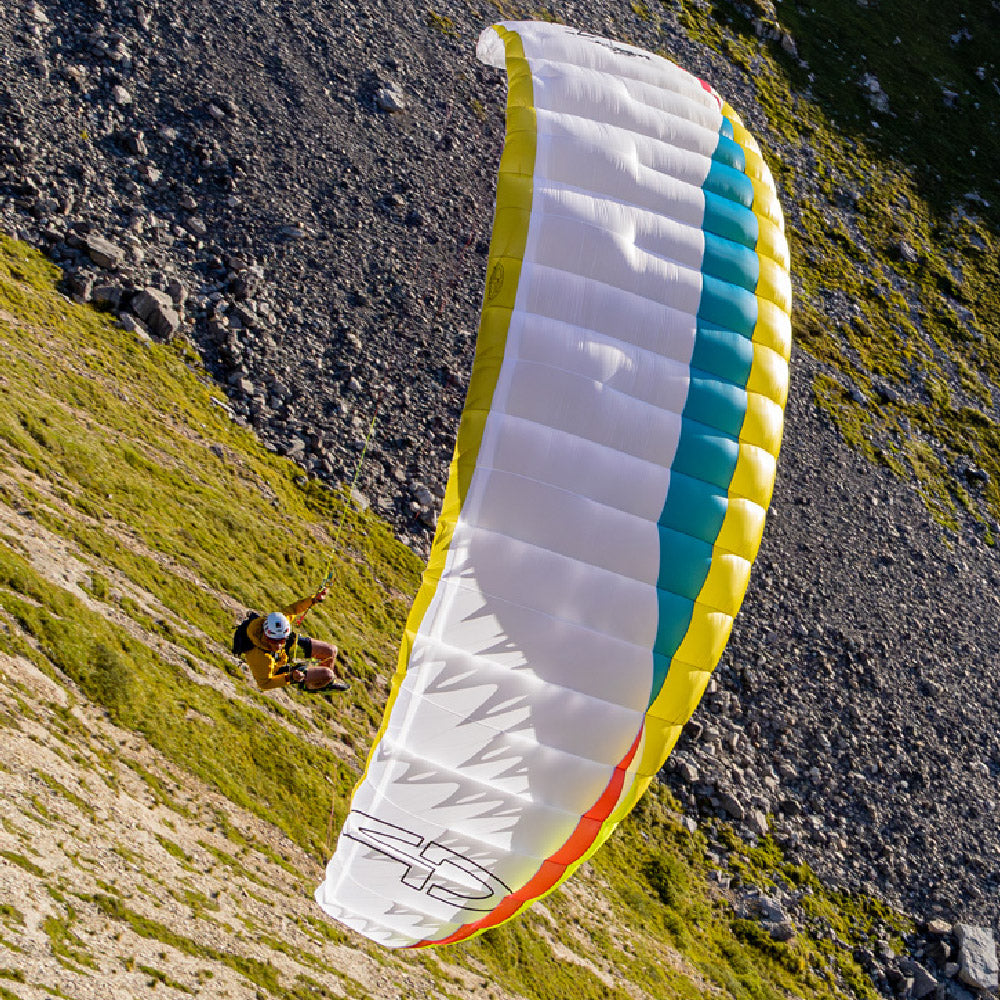

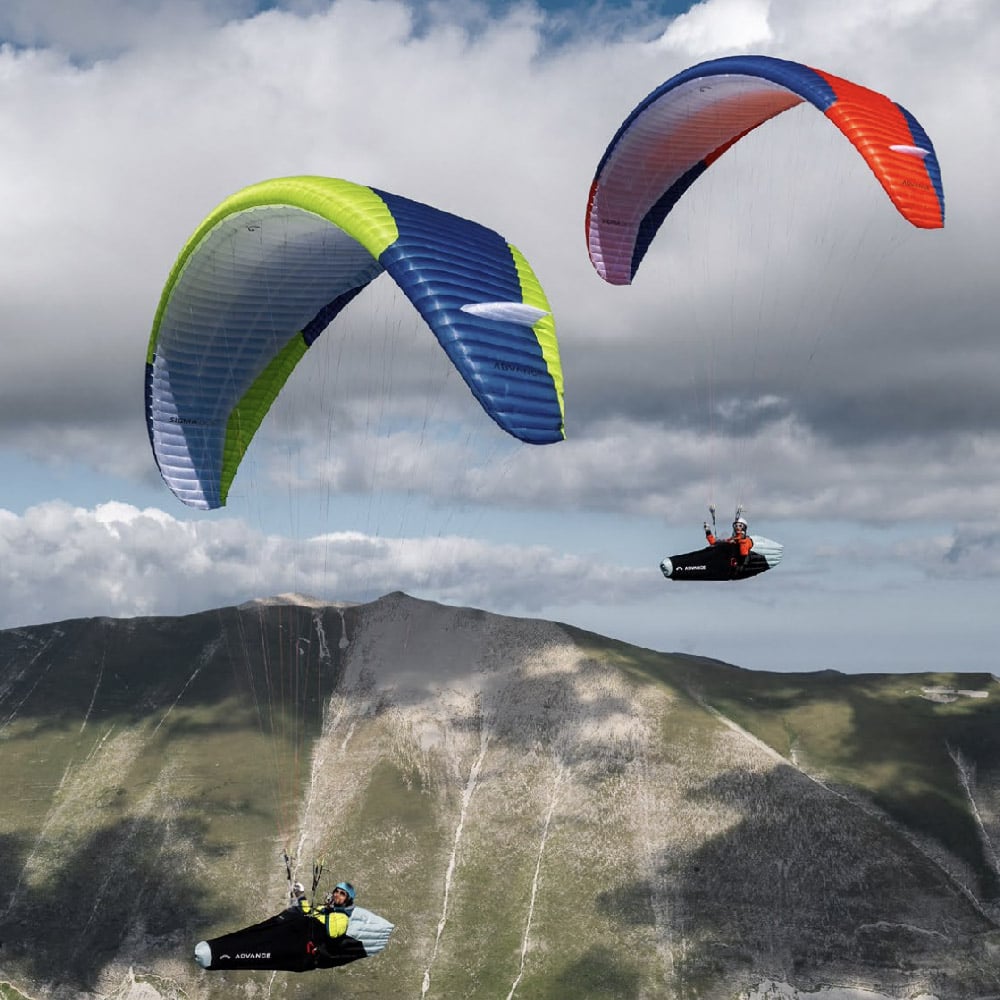


Advance SIGMA 12 DLS Wing Review
- by Carlo Borsattino

We’ve flown the Advance SIGMA 12 DLS in sizes 22, 24, and 26, paired with a variety of harnesses, including the Advance Lightness 4. The SIGMA 12 continues Advance’s clear evolution in their high-end EN C sports class line — and it does so with refinement.
Pilots familiar with the SIGMA 10 will remember its sporty, precise character that put it at the higher end of the C class. The SIGMA 11 softened that edge while keeping its agile handling and precision, making it calmer and more accessible without losing the performance. The SIGMA 12 DLS feels like another step forward in that evolution. It retains the best of the SIGMA 11—sweet, precise handling and solid feel—but refines it further. The wing feels even calmer, even easier, while subtly improving performance, particularly noticeable on bar and using the rear risers.
Ground Handling & Launch
From no-wind inflations to stronger, gustier conditions, the SIGMA 12 DLS proves itself extremely sorted for its class. Launching in still air is a breeze: the wing inflates cleanly and forms its shape without fuss. There's no need for a special layout or aggressive technique—though good preparation always helps.
In stronger winds, the SIGMA 12 shows its refinement. It inflates easily and builds a clean wall, making it easy to see and control. Importantly, it doesn’t want or need a heavy hand. Pulling hard, as you might with a lower class wing, will cause it to surge up too quickly. But if handled with finesse, it’s delightfully easy to manage—even bringing it up at an angle or in crosswind kiting is smooth and predictable. Overall, ground handling is a strong point: sorted, forgiving, and enjoyable.
In the Air
From the moment you lift off, the SIGMA 12 feels solid and reassuring overhead. It doesn’t pitch or surge around excessively. Compared to earlier models, it has a calmer, more pitch-stable character while retaining that signature Advance tautness — not planky like some two-liners, but tight and confidence-inspiring.
Climbing in thermals is where the SIGMA 12 shines. In recent flights, including tricky thermal days against top pilots on high-performance two-liners, it held its own. The glider offers excellent feel in weak, broken lift and allows precise placement in tight cores. It feels like a wing that rewards active, attentive flying — you can dig in, work the lift, and really ‘make something out of the conditions.’ This is a glider for pilots who love thermalling, who enjoy the satisfaction of mastering the air rather than simply hanging on for the ride.
On the ridge, it's equally rewarding: efficient, nimble, and precise, letting you adjust your turn to the conditions with ease.
Handling
Handling is one of the SIGMA 12’s standout qualities. It retains that sharp, precise Advance feel, where brake inputs translate directly into exactly the turn response you expect—progressive, smooth, and predictable. The brake lengths are moderate; flying with a half-wrap feels ideal across all sizes tested.
It turns flat when you want, with excellent control over turn shape. You can flatten it out using outer brake and weight shift, or tighten it up cleanly when needed. It’s a glider that gives you options and fine control — a real pleasure in all kinds of thermals, from light and scratchy to strong and punchy.
Performance
Performance on the SIGMA 12 DLS is excellent—clearly improved over the SIGMA 11, though the 11 still holds its own. And the 11 still performs really well; we’ve got pilots flying it who continue to do noticeably well.
There’s this assumption that two-liners always perform better than three-liners, but from my testing, that’s not always the case. Some older two-liners don’t seem to outperform the best three-liners, like the SIGMA 12 DLS — or even the SIGMA 11. Two-liners have a different feel, which some pilots prefer for the solidness, but others might not like as much. In fact, I’ve seen some pilots try EN-C two-liners and then return to three-liners because they prioritize the pleasure of flying over pure performance.
This glider glides really well. Among EN-C three-liners, I think it’s right at the top — maybe the best, along with the Artik 7. Compared to the 11, the 12 feels like it performs a little better all the time, especially when on bar and gliding into wind. In climbs, they seem quite equal, though the SIGMA 12 DLS might have a slight edge in lighter conditions.
The SIGMA 12 DLS also feels even more solid and efficient. The leading edge stays absolutely clean and solid, even at full bar — not planky, but also not nervous or twitchy. Very efficient, very good. From my testing, its performance is not far off the best C two-liners. Yes, they have a little more speed — wings like the Scala, Photon Light, and X2C stand out — but the SIGMA 12 DLS is very close.
The SIGMA 12 DLS impressed even top EN C 2-liner pilots—some assumed it was a 2-liner, based on how it performed in tough conditions. While the best 2-liners still have the edge at full speed, the SIGMA 12 wins on handling and feedback—even compared to the best-handling 2-liners.
Flying on the rear risers
Flying on the rear risers, I think Advance have done a really nice job. It's a pure three-liner, and they've decided to prioritize the risers being nice to handle — no sticks catching on your lines. You just put your hands inside the risers, effectively; they’re just loops. You put your hands there, and it's fairly firm, but there’s a good connection. Advance have done a really good job because, quite often with three-liners, when you're flying on the rear risers and you pull them down a lot, you see big creases across the wing. I didn’t see any of that with the SIGMA — very clean and efficient. The way they've made the whole riser system is really nicely done, and it seems to work really well. It's not quite the same feeling as flying on a two-liner, but it certainly works very well.
Descent Techniques
Big ears are easy and effective on the SIGMA 12. Pulling the outer A's is straightforward and not too physical. The ears remain generally stable, though they may flap slightly in turbulence, which is normal. Releasing them is easy, with a quick pump clearing them fully. I was very happy with the classic big ears, and that's the technique I’d use on the SIGMA. Spirals are very controllable — the handling gives you real control over how you go in, and you can adjust how fast you're going down and how you come back out. No tendency whatsoever to lock into a spiral, at least from what I found. Obviously, different configurations can have different effects.Spirals are also well controlled, thanks to the precise handling.
DLS: Yes or No?
The DLS — Durable Lightweight Structure — is light yet durable, with a standard longevity comparable to a normal, standard-weight glider. So for anyone wondering, "Should I go for this? Will it last as well as a standard glider?" — well, that’s the whole point of DLS. Advance basically guarantees that the durability is as good as a standard-weight glider. They've been really clever in the construction to get the weight down. They've also used lighter materials in places, but only in areas that experience less wear. So you kind of get the best of both worlds.
For example, with the Niviuk Artik 7 — that’s more of an ultra-light wing. And you really notice it: it's even lighter and more compact, quite noticeably. But with that ultra-light fabric, you also notice it blows around more in the wind, whereas standard-weight fabric is a bit easier to manage in stronger winds.
Conclusion
The Advance SIGMA 12 DLS is a superb refinement in the SIGMA series. It delivers outstanding performance for its class, with precise, rewarding handling and a solid, reassuring feel. It’s equally at home working weak, tricky lift or gliding efficiently on bar into wind.
For pilots who love thermalling and value precise control and refined feel, the SIGMA 12 is a joy to fly. It offers close-to-two-liner performance while keeping the more forgiving nature and comfort of a well-sorted three-liner. In our view, it's right at the top among today’s best sports class wings.
Flybubble video review
Brought to you by Flybubble
Like what we do? The best way to thank and support us is to buy gear from us and recommend us to others
- Posted in:
- Articles
- Gear Guides
- News
- Paraglider Reviews


