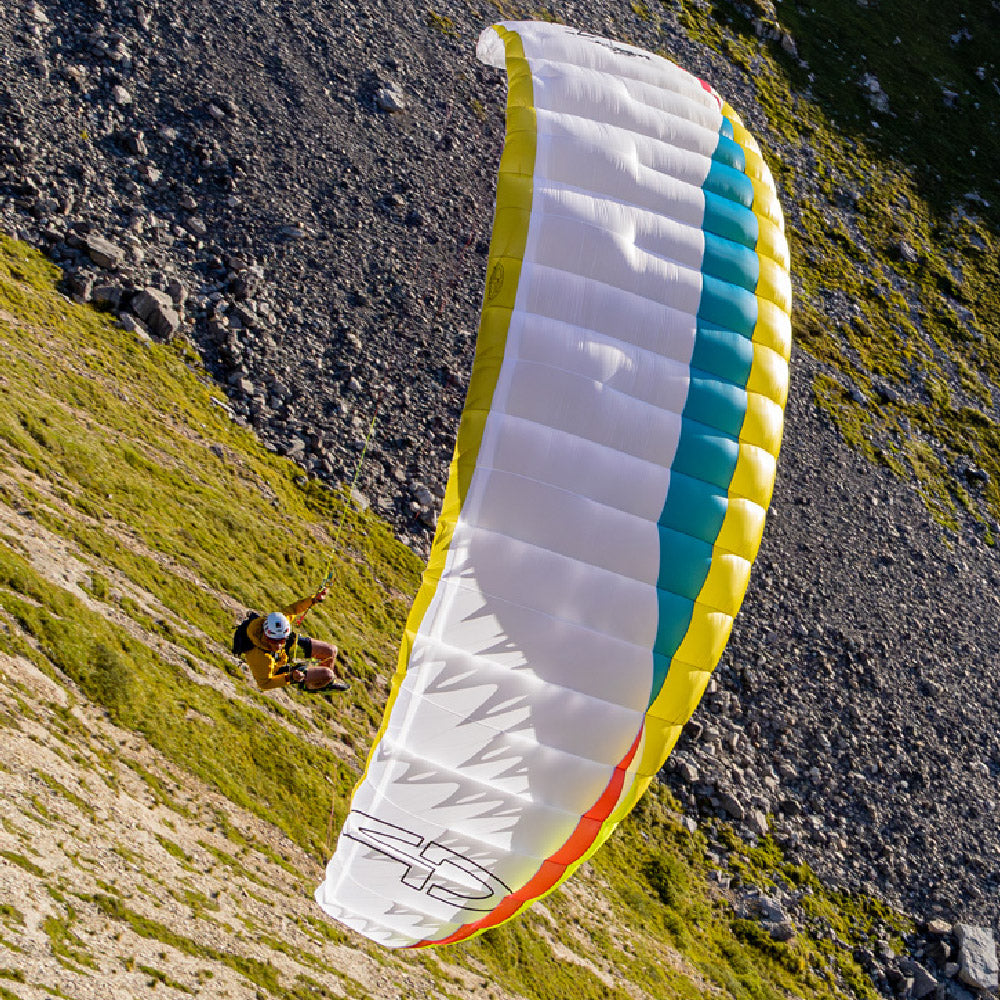
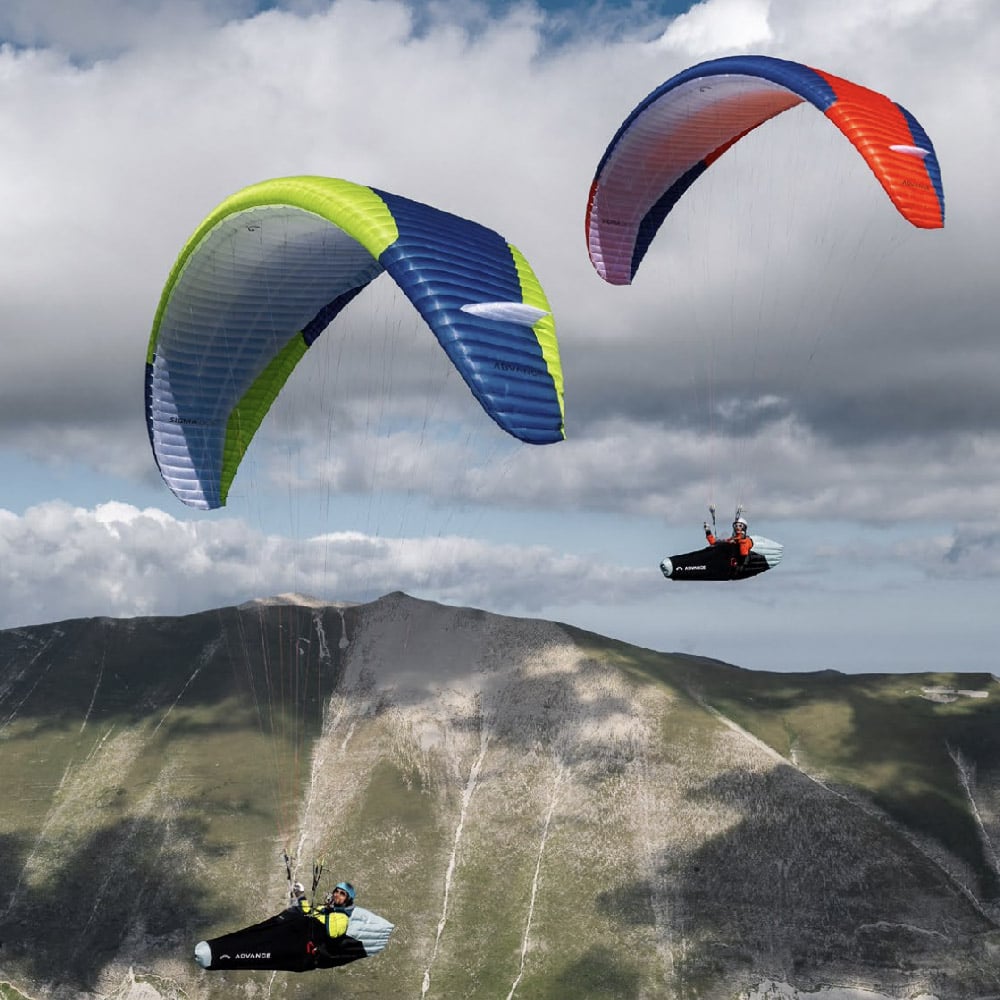
After several flights on the new Ozone Vibe GT, including everything from winter air to stronger spring thermic conditions, we can confidently say: Ozone has produced a seriously impressive addition to the mid-B class. The Vibe GT combines sporty, playful handling with excellent performance and a very solid, confidence-inspiring feel in turbulence.
The closest comparisons in terms of feel and character are probably the Ozone Swift 6 and Ozone Rush 6, though in our opinion, the Vibe GT feels slightly closer to the Swift 6 overall due to its immediacy in the handling and lighter, more agile feel.
Performance
Performance is extremely impressive for the class. Flying alongside a range of strong mid-B and high-B gliders, the Vibe GT consistently felt highly competitive in climb, glide, and usable speed.
Compared to the best modern high-B wings, it’s surprisingly close overall. Naturally, the higher-performance wings still retain an edge when fully accelerated and gliding hard into wind or through strong sink, but the gap is smaller than many pilots might expect.
Trim speed is particularly good, giving efficient and reassuring glide performance without feeling overly fast or demanding. Even without using the speed system, the glider still penetrates very well into wind and maintains glide efficiently.
The Vibe GT clearly sits right at the sharp end of the current mid-B category in terms of overall XC performance.
Pilot Demands
Although the Vibe GT is very solid and collapse resistant overall, it is definitely on the sportier side of the mid-B category.
Compared to something like the Ozone Buzz Z7, the Vibe GT provides significantly more feedback, more agility, and a more direct connection with the air. It communicates conditions clearly without becoming nervous or twitchy.
Brake travel is relatively short, and the glider responds quickly to pilot input. This means pilots with heavy-handed control inputs will need to fly accurately and actively. The wing rewards good piloting technique but is less forgiving of poor brake management than calmer low-B gliders.
That said, the overall structure and solidity of the wing are extremely reassuring. In active air the center section feels very stable and collapse resistant, with only occasional minor tip softness or tip tucks noticeable in some situations, particularly during launch phases.
Overall, the Vibe GT feels ideally suited to pilots looking for a sporty and engaging mid-B rather than a very mellow progression wing.
Ground Handling and Launch
Ground handling is generally very good. The glider inflates cleanly and rises well, with a clear and well-organised riser setup.
The tips can occasionally feel slightly soft or floppy during inflation, but in our opinion this actually contributes positively to the wing’s in-flight behaviour, preventing the tips from feeling overly aggressive or surge-prone.
Launch behaviour remains predictable and manageable, and the wing comes overhead cleanly without excessive pitching or sharp reactions.
The risers themselves are very nicely optimized. Ozone have gone with a fully developed BC bridge system, prioritizing in-flight performance and control. While this does make the risers slightly more fiddly on the ground compared to simpler systems, they remain cleanly laid out and practical in use.
We were also pleased to see standard maillons fitted rather than ultra-light soft links, favouring practicality and ease of maintenance.
Handling
Handling is one of the strongest aspects of the Vibe GT.
The wing feels playful, agile, and responsive, with relatively short brake travel and immediate reactions to inputs. It hooks efficiently into thermals and climbs very well even in smaller, tighter cores.
Compared to the Rush 6, the Vibe GT feels slightly lighter and more immediate in the turn, with less inertia. The overall feel is dynamic and enjoyable without becoming excessively energetic or demanding.
To get the best climb performance, we found it benefits from a little outer brake or high-side support during tighter turns. If flown purely on inside brake, the wing can develop a slight tendency to roll nose-down rather than maintaining the flattest possible thermal turn.
This is very different to calmer wings like the Buzz Z7, which naturally tend to stay flatter and more passive in thermals even with simpler pilot inputs.
The Vibe GT rewards active, accurate piloting and gives an excellent feeling of connection with the air.
Climb
Climb performance is excellent.
Flying alongside other strong pilots and modern mid-B and high-B gliders, the Vibe GT consistently climbed extremely well and remained highly competitive throughout testing.
Its efficient turning behaviour combined with direct handling allows the pilot to quickly center and exploit thermals effectively, particularly in stronger spring conditions where the sporty handling really shines.
The glider provides enough movement and information to clearly understand the air without becoming tiring or overly active.
Speed Bar and Glide
The speed system is very usable and one of the highlights of the wing.
Acceleration is relatively light, with a good amount of travel for the category and roughly around 12 km/h additional speed over trim in the conditions we tested.
Most impressively, the wing remains extremely solid and efficient on the bar. Ozone has clearly prioritised accelerated performance and rear-riser usability.
The BC bridge system is genuinely excellent in flight — one of the best implementations we’ve used across any class. Inputs are very light but still provide excellent feedback and connection with the wing.
This makes active accelerated flying highly intuitive. The glider can easily be controlled through turbulence using the rear risers without excessive effort or heaviness.
Compared to older Ozone rear-riser systems, this setup feels significantly more refined, lighter, and more usable for serious XC flying.
Descent Techniques
Classic big ears work very well thanks to the clearly separated outer A system. The ears are easy to pull, effective, and stable in flight without excessive rolling or instability.
As with most modern gliders, applying a little speed bar before inducing ears improves effectiveness and stability further.
We also experimented with tip stalls, though in our opinion, classic big ears felt more natural and effective overall on this wing.
Spirals enter progressively and predictably, though the glider can build rotation quickly if aggressively initiated. Recovery is clean and manageable.
Wingovers are particularly enjoyable thanks to the wing’s playful handling and solid structure. The Vibe GT has a genuinely fun side to it and encourages active flying and playful manoeuvring.
Collapse Behaviour
We performed asymmetric collapses and frontals during testing.
The wing behaved very well overall, remaining easily manageable with moderate reactions. Interestingly, during larger asymmetric collapses, the glider sometimes turned slightly away from the collapsed side, helping reduce rotation and keeping the behaviour reassuringly manageable.
Overall collapse behaviour feels very confidence-inspiring for a sporty mid-B wing.
Landing
Landing behaviour is straightforward and predictable.
The flare is effective, brake response remains clear during the landing phase, and the wing settles nicely without excessive energy or demanding timing.
Pilots transitioning from lower categories should still expect a more responsive and direct feel compared to calmer low-B wings, but experienced pilots in the category should quickly feel comfortable.
Final Thoughts
In our opinion, the Ozone Vibe GT is one of the strongest and most complete modern mid-B wings currently available.
It combines genuinely excellent XC performance with playful, sporty handling and a very solid, reassuring structure in turbulence. Pilots looking for a wing that feels alive, communicative, and fun without stepping into the full demands of the high-B class will likely find the Vibe GT extremely appealing.
Compared to calmer mid-B options, it definitely leans toward the sporty side of the category, rewarding active piloting and good technique. However, the payoff is a glider that feels engaging, efficient, and highly capable across a wide range of conditions.
Ozone has clearly focused on creating a wing with excellent accelerated usability, highly refined rear-riser control, and genuine XC capability while still maintaining approachable comfort and solidity for the class.
Summary
Performance: Outstanding for the mid-B class, highly competitive with top modern wings
Comfort: Solid and reassuring overall, though definitely on the sportier side of mid-B
Handling: Agile, playful, direct, and highly enjoyable
Ground handling: Clean launches with slightly soft but forgiving tips
Bar and rear risers: Excellent accelerated behaviour with one of the best BC bridge systems we’ve used
Climb and glide: Exceptional climb and very efficient glide for the category
Fun factor: Very high: sporty, engaging, and rewarding to fly
The Vibe GT is a seriously impressive addition to the modern mid-B category and a glider we expect many ambitious XC pilots will love.
Flybubble video review