





Skywalk Range X-Alps 3 – Standard vs AV (Athlete Version)
- by Carlo Borsattino

When Skywalk launched the third generation of their Range X-Alps harness, first thought was: Do we really need another ultra-light pod? The X-Alps 2 was already one of the lightest full-featured pods out there. But after flying both the Standard and Athlete (AV) versions, we can see exactly where they’ve gone with this update — and why.
The Range X-Alps 3 isn’t a radical redesign. Think of it more as a carefully refined tool. The DNA of the X-Alps 2 is still there, but with tweaks to make it easier to live with, quicker to set up, and even more targeted to specific types of pilots.
Two Flavours: Standard and AV
Skywalk didn’t just make one version — they made two.
- Standard – About 2 kg. Still incredibly light for a full XC pod harness, but built with a touch more durability, more pockets, and more comfort.
- AV (Athlete Version) – Around a kilo lighter, smaller to pack, and stripped of anything that doesn’t serve a hike-and-fly race mission.
The Standard feels like the everyday driver for lightweight XC and vol-biv. The AV is the race-day rocket.
First Impressions & Build
Both versions share the same basic shape and design, with Skywalk’s usual neat finish. Carbon foot plates, smooth stitching, no sharp edges.
One of the first things you notice is how quickly the airbag inflates. The intake tube is wider and more efficient than before — it fills fast after take-off and dumps air just as quickly for packing.
The AV feels almost insubstantial in your hands — more like picking up a rolled-up windshell than a harness. The Standard has a bit more substance, with slightly wider shoulder straps and extra padding.
Looks, Finish, and Aerodynamic Refinement
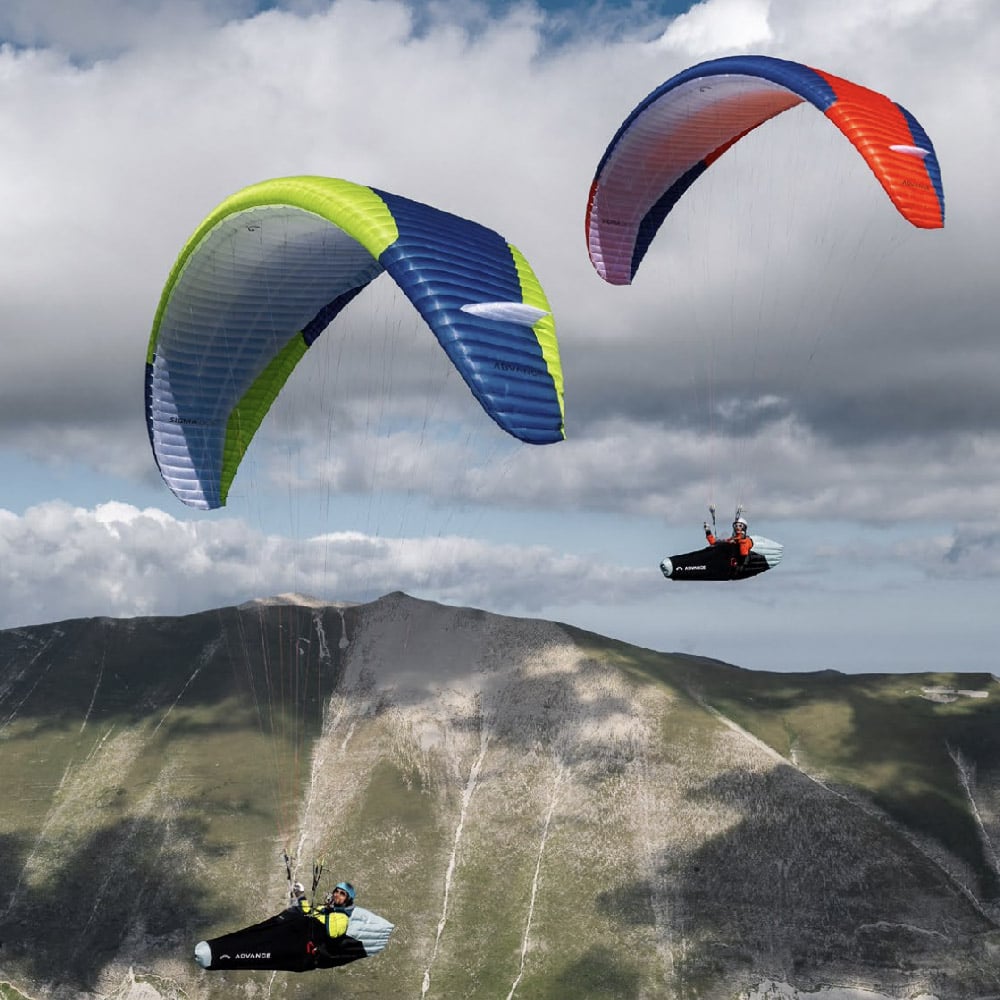
Standard and AV are a clear visual and aerodynamic upgrade over the RXA 2. The harness and tail sections are more refined, with sleeker shaping and a speedbag that closes more cleanly thanks to improved stretch fabric. It holds its shape better in flight, which not only looks good but also keeps the airflow smooth and consistent.
On the Ground
Before launch, both are easy to manage. The lighter AV naturally feels less structured, so you notice the narrower straps if you’re stood around in it for long periods. The Standard feels more supportive on your shoulders and hips.
Getting In and Out
Pod entry is excellent on both. If you inflate the airbag before launch, sliding your feet in is almost automatic. Neither needs a pod bungee, but the Standard gives you one if you like that security.
One tip: step on the foot plate when bringing your legs in, not on the pod fabric — it’s lighter than most pods and will last longer if treated gently.
Landing is clean — legs out in one smooth move.
Comfort in the Air
- AV – Similar to the X-Alps 2. Surprisingly supportive for the weight, but not as cushioned.
- Standard – Feels about 15–20% more comfortable than the X-Alps 2. The seat is a touch wider, and there’s a bit more padding around the hips and back.
Neither is “armchair” comfortable, but they’re both comfortable enough for long flights.
Harness Structure and Stability
The RXA 1–3 and 3 AV don’t use a seatboard — they’re hammock-style harnesses made of webbing, cord, and fabric, supported by a “power frame” of metal wires. Earlier versions (RXA 1 and 2) used stainless steel, while the RXA 3 and 3 AV switched to nitinol, which is lighter and more flexible. The wire pocket system is also improved — securely anchored now so they can’t slip out, unlike on older versions.
Some pilots have experimented with removing the power frame wires altogether. In fact, Liam did this on his RXA 2 and noticed only benefits—no downsides.
The RXA 3 also comes with optional stabiliser lines — one per side — attaching to the side webbing. I flew with and without them, and found they noticeably improve stability in turbulence without any downsides, so I leave them on. The RXA 3 AV integrates this stabilisation into the geometry itself, and it’s a clear improvement over the RXA 2 — a massive step up from the RXA 1, which I found twitchy in turbulence and not great to handle.
Reserve System
Both versions are optimised for small, lightweight reserves and have right-hand deployment only. The RXA 3 is also compatible with certain compact steerable reserves. Examples that fit well include:
- Charly TargetCross ST Light 100, 125
- High Adventure Beamer 3 Light 100, 130
The standard Beamer 3 100 might just squeeze in but isn’t ideal , and the Beamer 3 130 is too big . The reserve compartments are well-integrated but relatively small, so lightweight or compact models are your best bet. The deployment system is clean and functional.
Storage & Cockpit
This is one of the clearest points of difference between the two versions.
The standard RXA 3 has genuinely practical storage: a large back pocket, an under-seat compartment, a pole pocket, and a decent-sized cockpit. With smart packing, you could even carry lightweight bivouac gear.
The AV is far more minimalist, designed for pure racing efficiency. Storage is limited to pockets just big enough for a competition kit—hydration system, snacks, and an ultralight jacket. Anything bulkier will need to be strapped outside.
Protection
Both the RXA 3 and RXA 3 AV come with back protectors that are the same size, shape, and material, offering identical levels of protection. The only difference is the valve position, so the protectors aren’t interchangeable between models — make sure you have the correct one for each harness.
The Optional Ultra X-Alps Backpack
Skywalk also makes the Ultra X-Alps 55L backpack — only \~400 g — which pairs perfectly with the AV version. It’s got running-vest style straps, is aerodynamic, and fits *only* the most compact kit. The Standard harness with even a light glider won’t fit inside.
One quirk: the angled zip keeps the load tight but can slightly twist your gear if you’re not careful.
Sizing & Adjustments
Sizing is mostly about height. I’m 181 cm, 80 kg, medium-slim, and the Medium fits perfectly.
Back length and leg length matter too, so try before you buy if possible.
Adjustment range looks minimal but works fine once set up.
In the Air – Stability & Speedbar
Both harnesses are very stable on bar, even in rough air. The bar travel is smooth, evenly loaded, and easy to hold — no “pulley pain”.
Buckle Systems
- Standard – Simple pass-through buckles. Quick and idiot-proof.
- AV – A two-step closure with a safety loop. Slightly fiddlier, but you can put the shoulder straps on before the leg straps — useful in race starts.
Who They’re For
- AV– For hike-and-fly racers and gram counters. Minimalist, ultralight, and compact — but you sacrifice storage and a little comfort.
- Standard – For XC pilots who want a very light harness without going full spartan. More comfortable, tougher, and practical for everyday use.
Final Thoughts
The Range X-Alps 3 isn’t a revolution — it’s an evolution of a proven concept. Both versions take what the X-Alps 2 did well and refine it.
The AV is a scalpel: sharp, precise, made for speed and efficiency. The Standard is a multitool: still incredibly light, but with enough comfort and storage for big days out.
Neither is a casual harness for beginners. But for pilots who care about weight, pack size, and efficiency — and who want to choose between pure race mode or light-but-practical mode — the Range X-Alps 3 is one of the most compelling options out there right now.
Review by Carlo (Flybubble) & Liam (The Loft Workshop)
Flybubble video review
Brought to you by Flybubble
Like what we do? The best way to thank and support us is to buy gear from us and recommend us to others
- Posted in:
- Articles
- Gear Guides
- Harness Reviews
- News


)