






Supair ALP Test & review: Paragliding EXTREME Minimalist Harness (Only 1.6kg!!!)
- by Shopify API

Introduction
The Supair ALP is designed for Hike & Fly pilots who prioritize performance, compactness, and minimum weight. But is it the right choice for everyone? Who will benefit most from this harness, and who should steer clear?
The big question: Does the ALP truly deliver a performance advantage, or is it just another ultralight pod? Initially, we were skeptical about how much of a boost it could provide. But after extensive testing—flying with nine different wings over multiple days and conducting direct comparisons with other harnesses—we’re confident that the improvement is real.
Supair says the ALP halves harness drag and improves sink rate by 10-15 cm/sec - a big performance gain! Our testing confirmed a clear difference in sink rate and glide, especially at accelerated speeds, and the effect was most pronounced with high-performance wings.
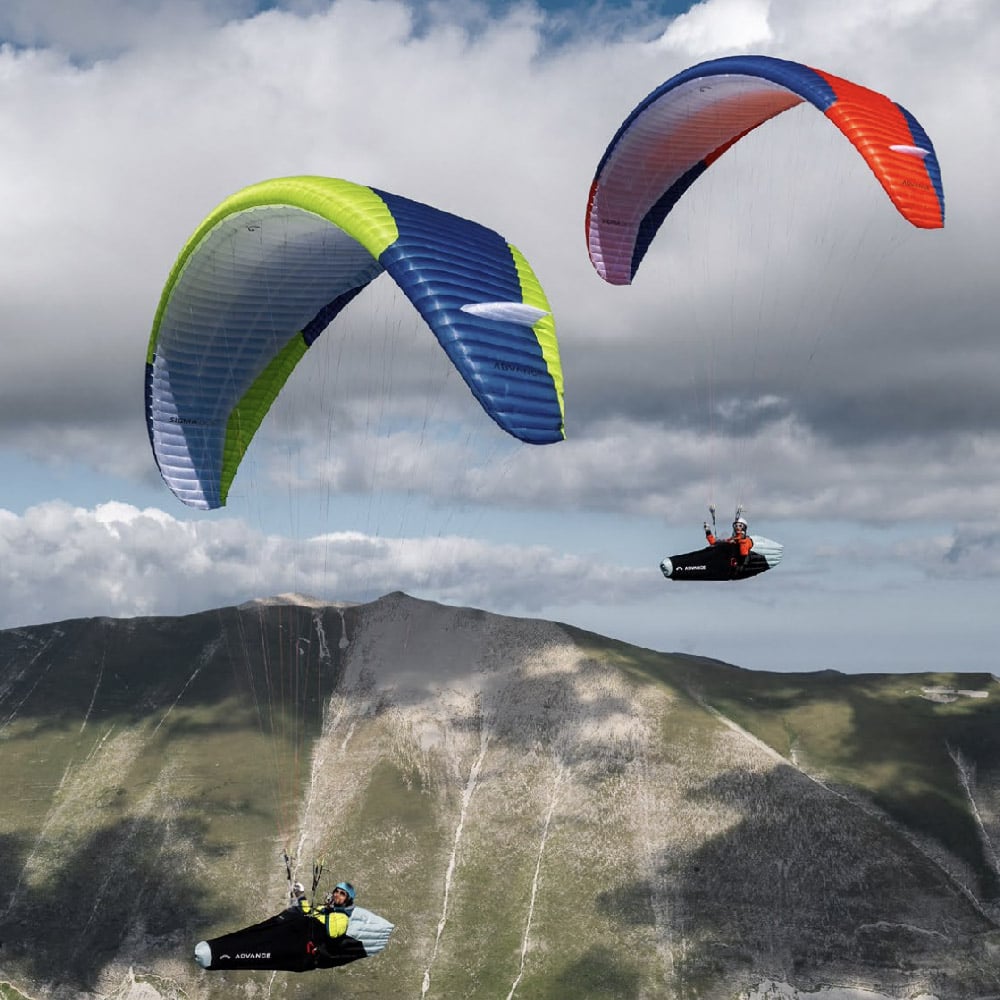
There’s a reason why nearly all top competition pilots have transitioned to full-envelope, torpedo-style harnesses like the Ozone Submarine. For those seeking the best balance between ultralight weight and top-tier performance, the ALP stands out as a compelling choice.
Testing the ALP
I've done over 100 launches, flights, and landings with the Supair Alp, clocking over 50 hours in the air across 20 days, testing it with nine different wings. As always, I was running around a lot, putting its usability and durability to the test.
The Alp’s main draw—aside from its low weight and compact size—is the performance boost it offers. Most competition pilots have switched to torpedo-style harnesses like the Ozone Submarine, but can the 1.6 kg Alp match the performance of an 8 kg Submarine?
Performance Gains
After testing it with nine wings over 20 days, I found a clear performance boost. The biggest improvements are a reduced sink rate and better glide, especially at higher speeds. This is most noticeable with high-performance wings—the reduced sink rate helps with climbing and staying in weaker lift. I’ve even out-climbed pilots I usually wouldn’t and stayed up while others sank.
If you fly inefficiently, you’ll still glide worse than someone in a standard pod harness. But, all else being equal, the Alp provides a performance advantage over standard pods, much like flying a better wing.
The Minimalist Setup
Pairing the Alp with an ultralight, high-performance wing, reserve, instrument, helmet, and backpack, a 70 kg pilot can have an incredibly compact and high-performance setup weighing only around 7 kg—10 times lighter than their body weight.
This is, let’s say, an extreme minimalist harness. It’s aimed at high-level pilots who understand what this product is all about. It’s very fragile, requires more care, and takes more time to set up. Putting it on is a bit fiddlier compared to standard harnesses. For pilots just looking for an everyday flying harness, this isn’t the right choice. This is for those truly seeking the lightest and best performance.
Who Should (and Shouldn’t) Buy It?
If the right pilots buy this harness, they’re going to love it. It’s perfect for hike-and-fly adventures, races, and long XC flights. However, if the wrong pilots buy it, they’ll likely find it too fragile, too fiddly, and not user-friendly enough. I’ll be honest—it took me some time to get used to it. Of course, I’ve been flying for over 31 years, with thousands of hours in the air and hundreds of harnesses tested. I wouldn’t say it’s difficult to use, but Supair has definitely designed it for highly competent pilots—both in flying skills and in setting up their harness properly.
Key Considerations and Warnings
One word of caution: you need to be careful when getting into this harness. Make sure you put your legs in the right place, avoid missing a leg strap, and don’t accidentally put your leg through one of the speedbag lines—that could be a problem. This harness demands experience and confidence. If extra setup steps are a hassle for you, then this isn’t the right harness.
In my time using the Alp, I have noticed that it’s relatively fragile. I managed to damage the bottom of the speedbag, likely because I’m at the upper size limit for this harness. This means my feet extend slightly past the envelope. But with a harness like this, you have to expect some wear and tear over time. That’s the trade-off—you get an incredibly lightweight, compact package with amazing performance, but you need to decide if this level of minimalism is right for you. Do you prioritize ultralight weight and performance, or do you prefer something more durable, user-friendly, and easier to set up?
The Tricky Part – Getting In
Now, let’s talk about what’s probably the trickiest part—the entry process. If you have a lot of bulk in your pockets, it will make getting into the harness harder. The Alp is designed to be slipped on like a pair of pants. First, the reserve is here, secured by a magnetic zip that always wants to close itself. It’s a brilliant design—no unzipping is required, and once enclosed, no air escapes, making it highly efficient. I’ve found it easy to get in and out of the harness, but you need to follow the right sequence.
- Wrap the chest part of the harness around the reserve.
- Grab the leg straps and diagonal support straps—this is crucial.
- Place everything on the ground, ensuring a clear gap for your legs.
- Carefully step through the straps, ensuring you don’t put your leg through the wrong opening.
One important tip: make sure the speedbag envelope is properly positioned before you get in, as it can get stuck. Also, inflating the airbag protector after getting into the harness makes things easier. The shoulder straps and rear storage pocket should be properly adjusted to avoid unnecessary hassle.
Final Adjustments and Flight Deck Setup
Once inside, the next step is securing the chest strap and making final adjustments. It’s worth running your fingers around the harness to check that everything is correctly positioned and comfortable.
For the flight deck setup:
- Many minimalist pilots will opt for a simple instrument like the Naviter Omni.
- Others may also mount their phone for navigation.
- There is an optional cover for added aerodynamics and protection.
The rear fairing can be compressed by squeezing the air out before zipping it up. This ensures a streamlined shape while also keeping instruments dry in case of rain. The design allows easy access to your instruments during flight.
Final Thoughts
The Supair Alp is a remarkable harness for the right pilot. It offers:
✅ Exceptional performance for its weight
✅ Compact and minimalist design
✅ A significant glide and sink rate improvement
However, it also requires:
⚠️ Careful handling due to its fragility
⚠️ More time to get used to compared to standard pods
⚠️ A confident and experienced pilot to handle its quirks
In conclusion, the Supair Alp is a high-performance, ultralight pod harness designed for experienced pilots who prioritize weight savings and efficiency over durability and ease of use. If you fit that category, you’ll love it. If not, you might find it too fragile and fiddly. Ultimately, it’s all about choosing the right tool for the job.
Flybubble video review
Brought to you by Flybubble
Like what we do? The best way to thank and support us is to buy gear from us and recommend us to others
- Posted in:
- Articles
- Gear Guides
- Harness Reviews
- News


)