





BGD BASE 3 paraglider review
- by Carlo Borsattino

So, this time we’re talking to you about the BGD BASE 3.
The Base 3 comes from development that started with the DIVA 2. You can definitely see that the DIVA 2’s genes are in the BASE 3, but it’s not simply a lower-aspect-ratio DIVA 2. BGD have changed how it feels and how it flies to better suit the class. In fact, the pilot demands are very similar to its predecessor, the BASE 2, but the wing itself is very different.
So if you’re flying a BASE 2 and thinking, “Oh, I’ll just move to the BASE 3, it’ll be similar,” be aware—it’s a completely different glider. The pilot demands remain at the lower end of the high-B class, but the wing itself has a new character. It doesn’t feel overly demanding, and it doesn’t give you the sense that you need to step up your game dramatically. Instead, it offers high-B performance in a very comfortable, accessible way.
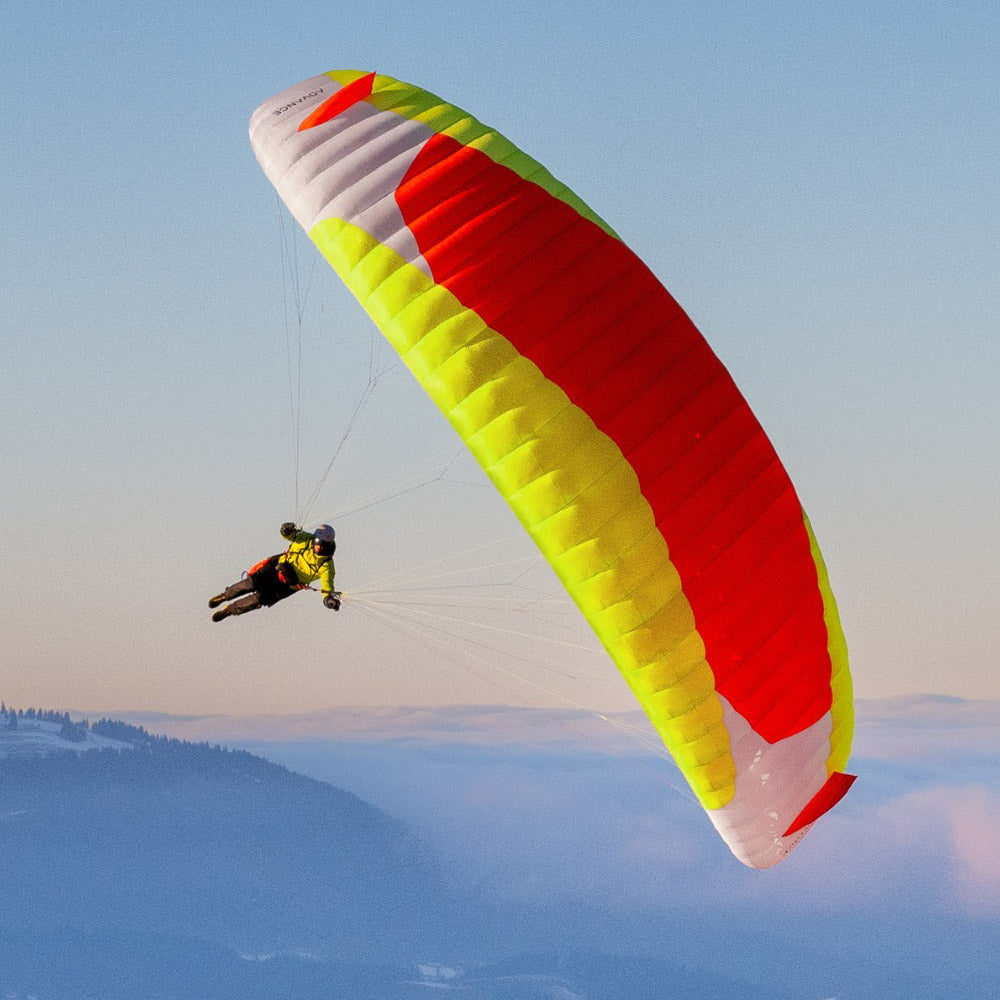
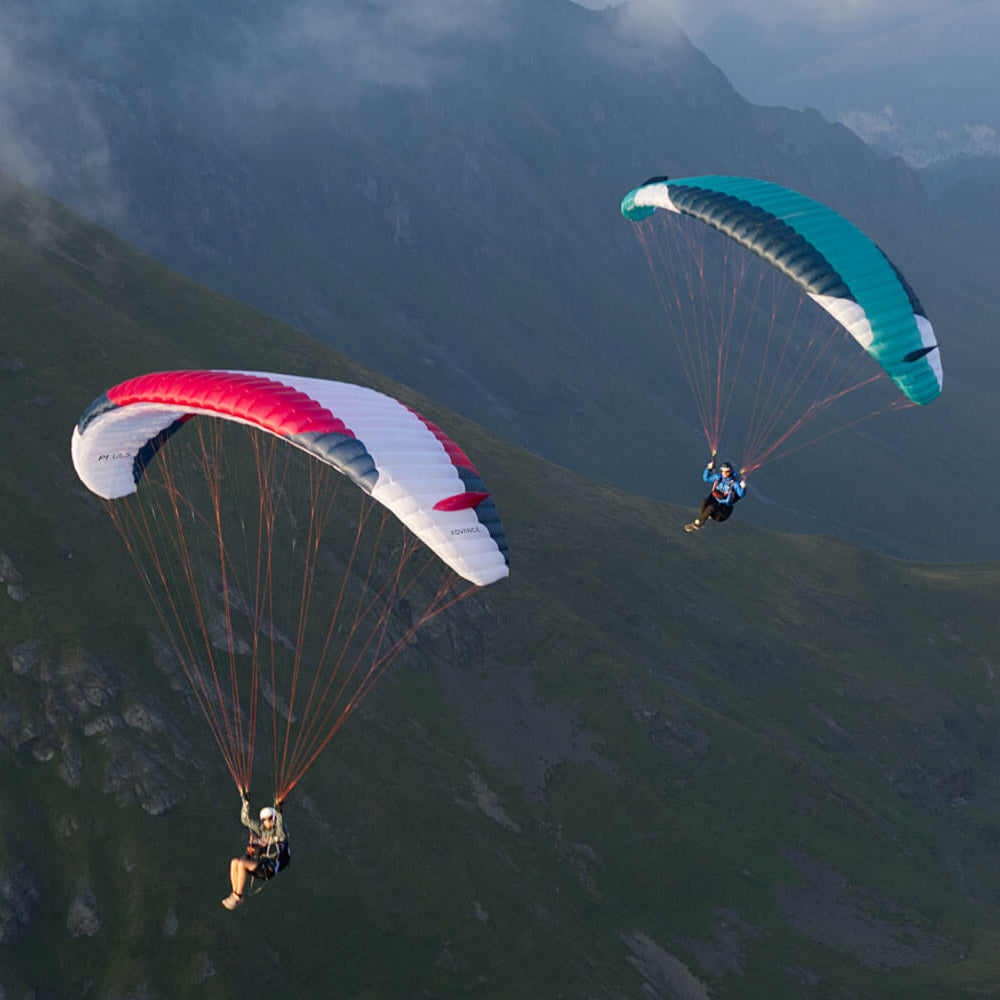
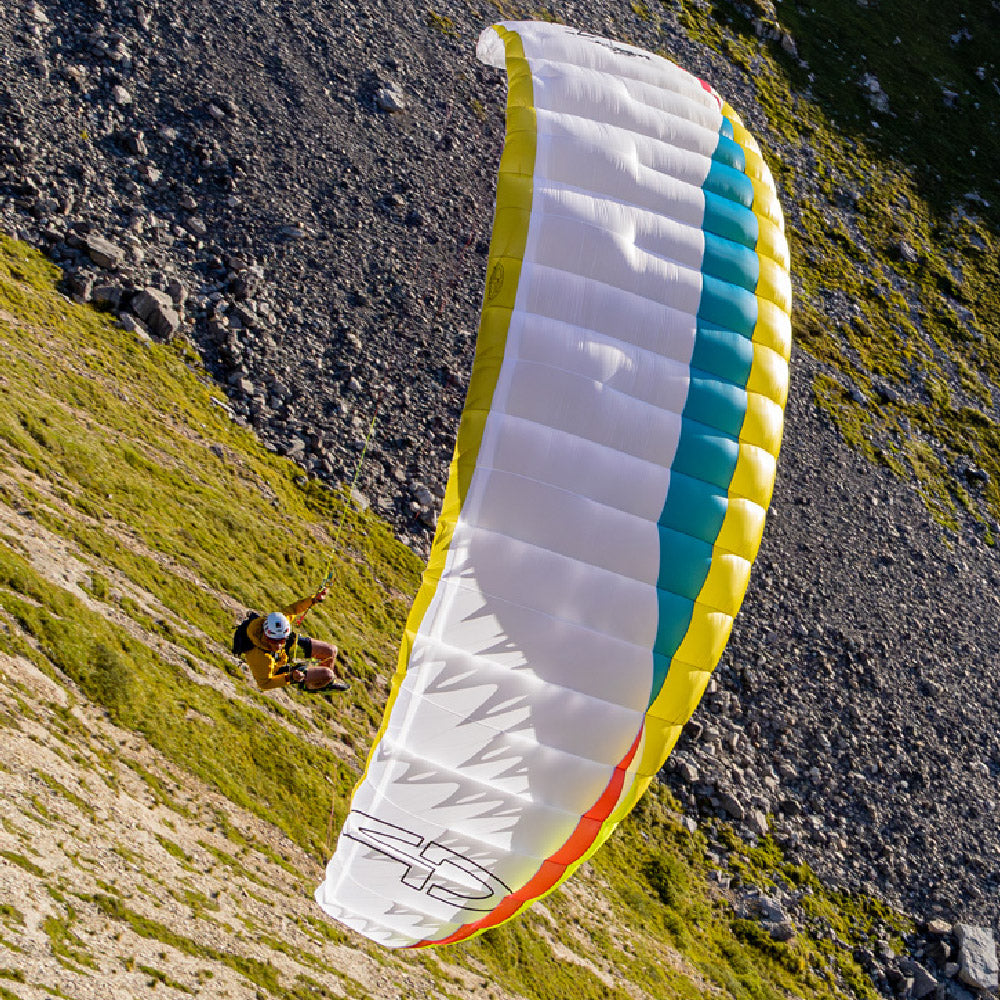
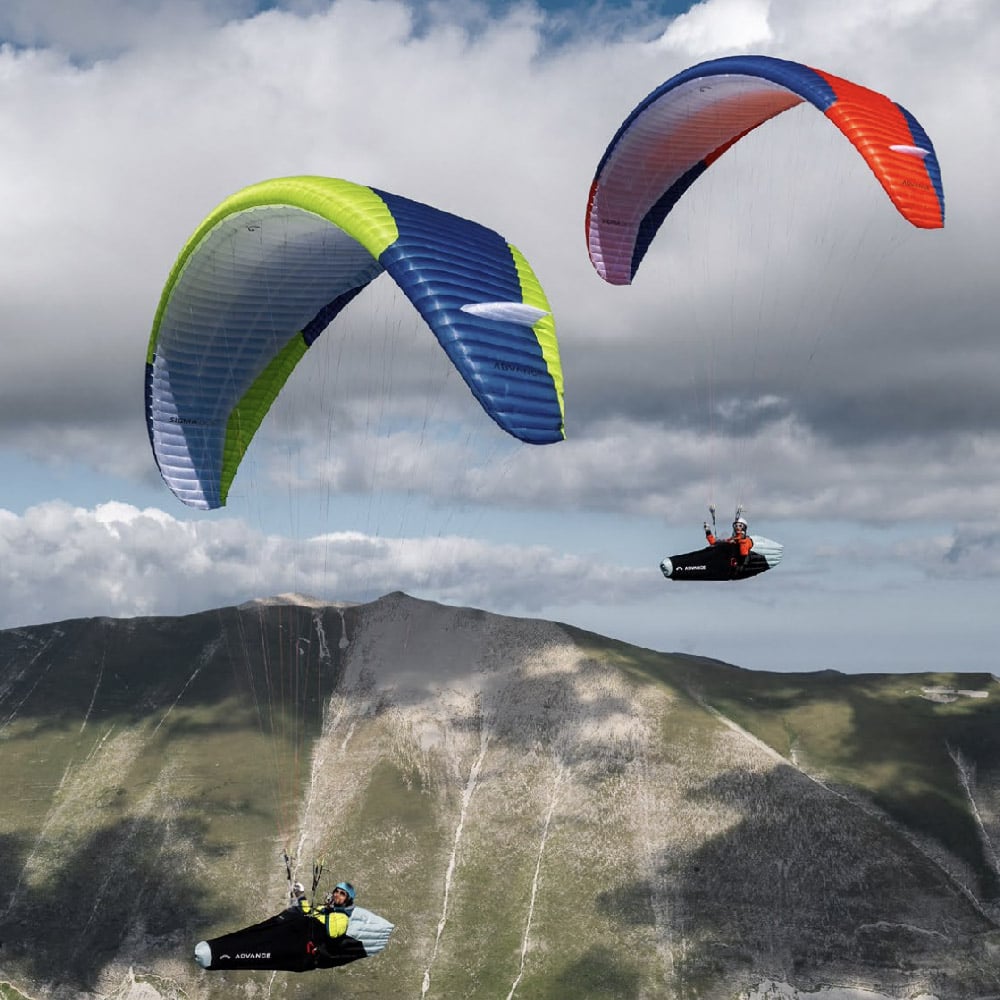
We think it’s a really great high-B wing. It’s excellent for cross-country flying but also fun for soaring and playing around the hill. It’s the kind of glider that works equally well for local flying: it climbs efficiently in light conditions, handles strong air well, and has very good glide performance.
Overall, we give it a big thumbs-up—especially for pilots moving into or already flying in the high-B class, looking for a solid, reassuring wing with great feedback, good handling, and very impressive performance.
Build quality
The build quality is excellent. Everything is well put together, clearly designed to be robust. BGD has used more durable materials throughout the construction—risers, lines, and canopy—so the Base 3 feels strong and long-lasting. For those who want something lighter, there’s also the Breeze, which we’ll review separately.
Ground handling and launch
Ground handling is relatively easy for its class. It’s especially forgiving in strong, gusty, or demanding conditions. In lighter winds, you just need to commit to the pull-through. The wing can pause slightly just before it reaches overhead, but it doesn’t drop back aggressively. Simply give it that little extra encouragement and it comes up smoothly. Forward launches are straightforward, too, provided you keep lifting through the pause.
In the air
We’ve flown the BASE 3 in a wide range of conditions, with different harnesses and pods, and what really stands out is how easy and forgiving it is for a high-B. When the air gets punchy and demanding, it remains solid and confidence-inspiring.
BGD talk about the “talkative tips” design, and it does give good feedback—but always in a reassuring way. The wing isn’t damped or boring. It feels stable and solid while still giving you useful information about the air.
The climb rate is excellent—one of the strongest points of the BASE 3. It consistently climbs very well in both weak and strong conditions.
The brake pressure is moderate: not too light, not heavy, and very direct. There’s no mushiness, and the stall point is clear and forgiving, making it easy to manage top landings or tricky slope landings in light thermic conditions.
Design features
The BASE 3 carries over some design concepts from the Diva 2, such as:
-
High arc and short lines, giving direct and intuitive handling.
-
Reduced line plan, improving performance and efficiency.
-
Raked wing tips, a feature more common on higher-level competition wings.
-
Winglets, likely contributing to spiral stability.
Despite these features, the BASE 3 has a softer handling feel compared to sharper, sportier wings in its class, but it still retains agility and precision when you need it.
Speed system and performance
The speed system is moderately light and adds around 14–15 km/h over trim. The glider remains very solid and confidence-inspiring on bar, with excellent glide performance. The leading edge stays clean, with minimal dimpling or fluttering, and it cuts efficiently through turbulent air.
The BC Bridge system is simple and effective—clean to use without line catchers or sticks. It works well if you pull straight down, rather than back, to avoid inefficiency.
Descent techniques
-
Big ears: Easy to pull in, stable, and effective. They reinflate smoothly, often without pumping.
-
Tip stalls: Possible, but more physical and not as comfortable. We’d recommend big ears instead.
-
Spirals: Easy to enter and exit, with moderate G-forces and no tendency to lock in.
-
Wingovers: Fun and agile thanks to the wing’s stability and collapse resistance.
Who it’s for
The BASE 3 is perfect for pilots who:
-
Want top performance in the high-B class without sharp or twitchy handling.
-
Are stepping up from a low-B and want an accessible but capable wing.
-
Fly cross-country but also enjoy local soaring and playful flying.
It’s not the lightest or most compact wing (packing volume is a little bulky compared to lighter constructions), but that’s because BGD have prioritised durability, solidity, and safety. If you want lighter and more compact, the Breeze is the alternative.
In short: The BGD BASE 3 is a confidence-inspiring, solid, and forgiving high-B glider with impressive performance, excellent climb, and great all-round capability.
That’s our wrap-up—we hope you’ve enjoyed this review, and we’ll see you in the next one!
Flybubble video review
Brought to you by Flybubble
Like what we do? The best way to thank and support us is to buy gear from us and recommend us to others
- Posted in:
- Articles
- Gear Guides
- News
- Paraglider Reviews


