
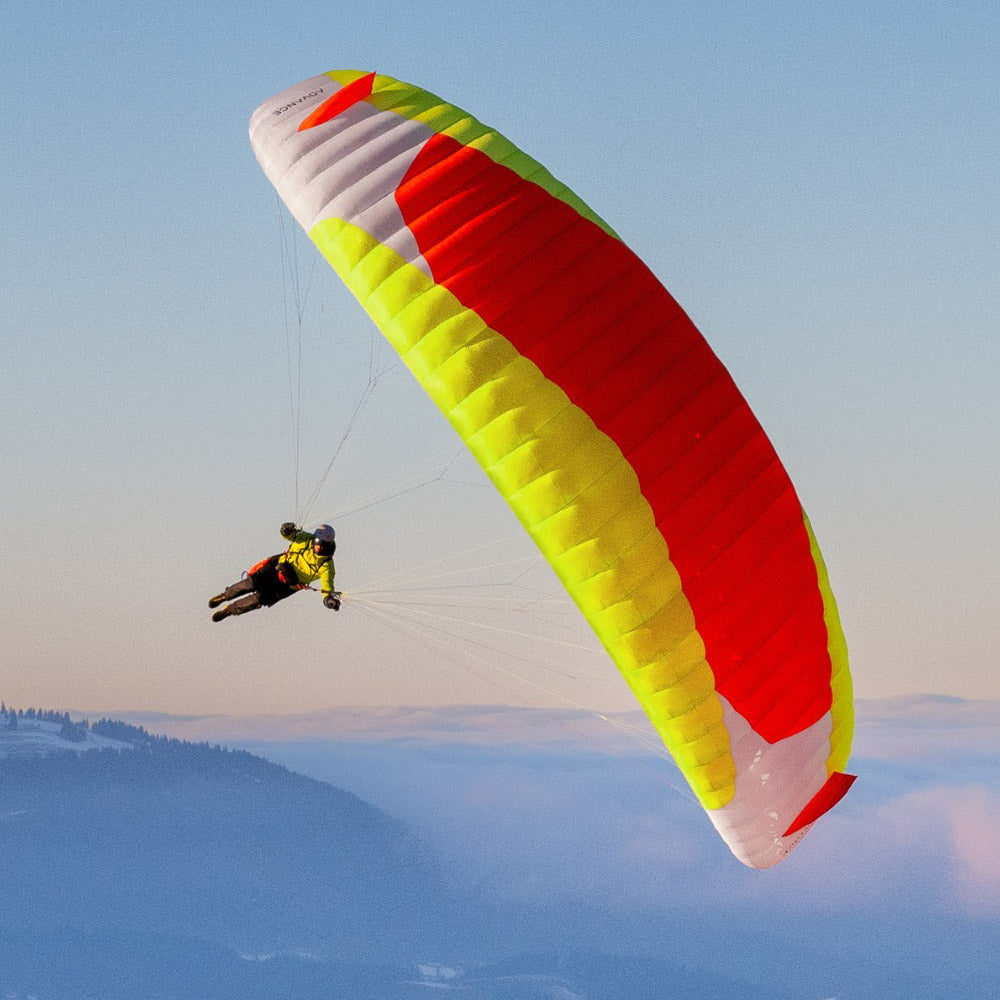


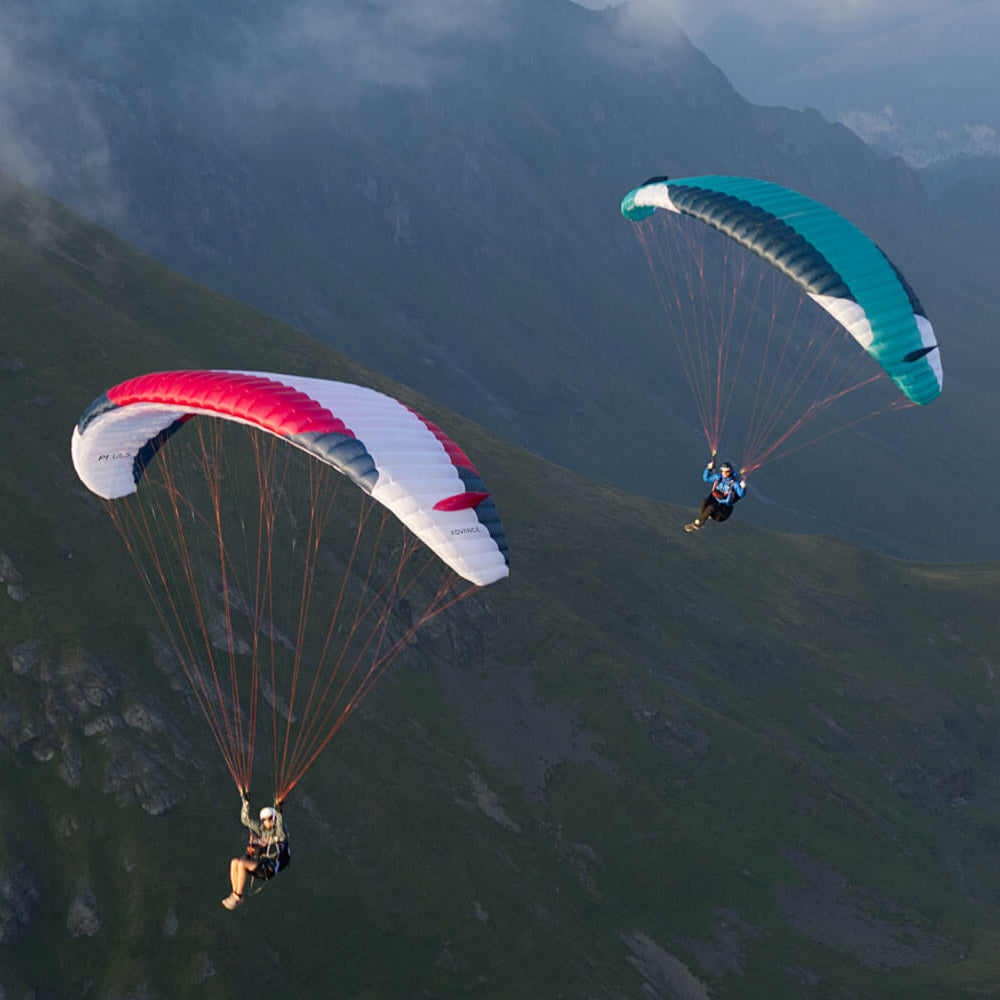
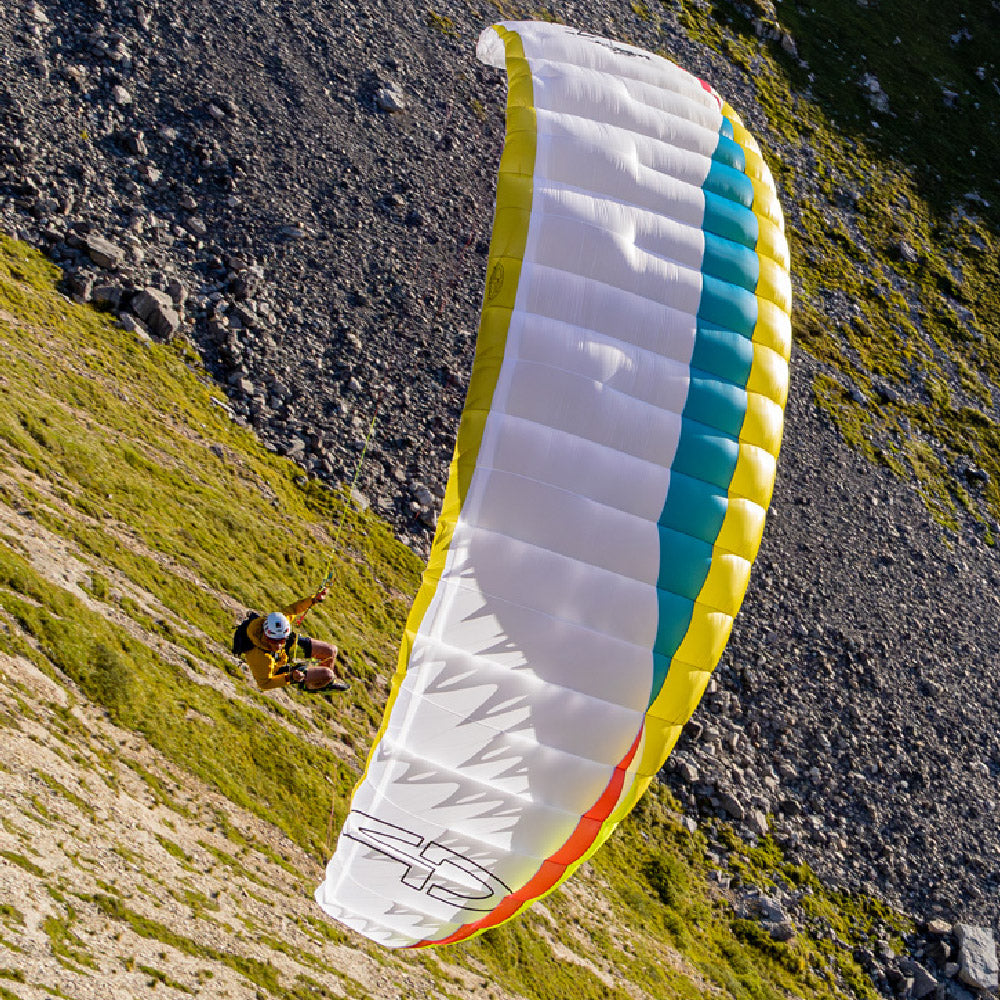

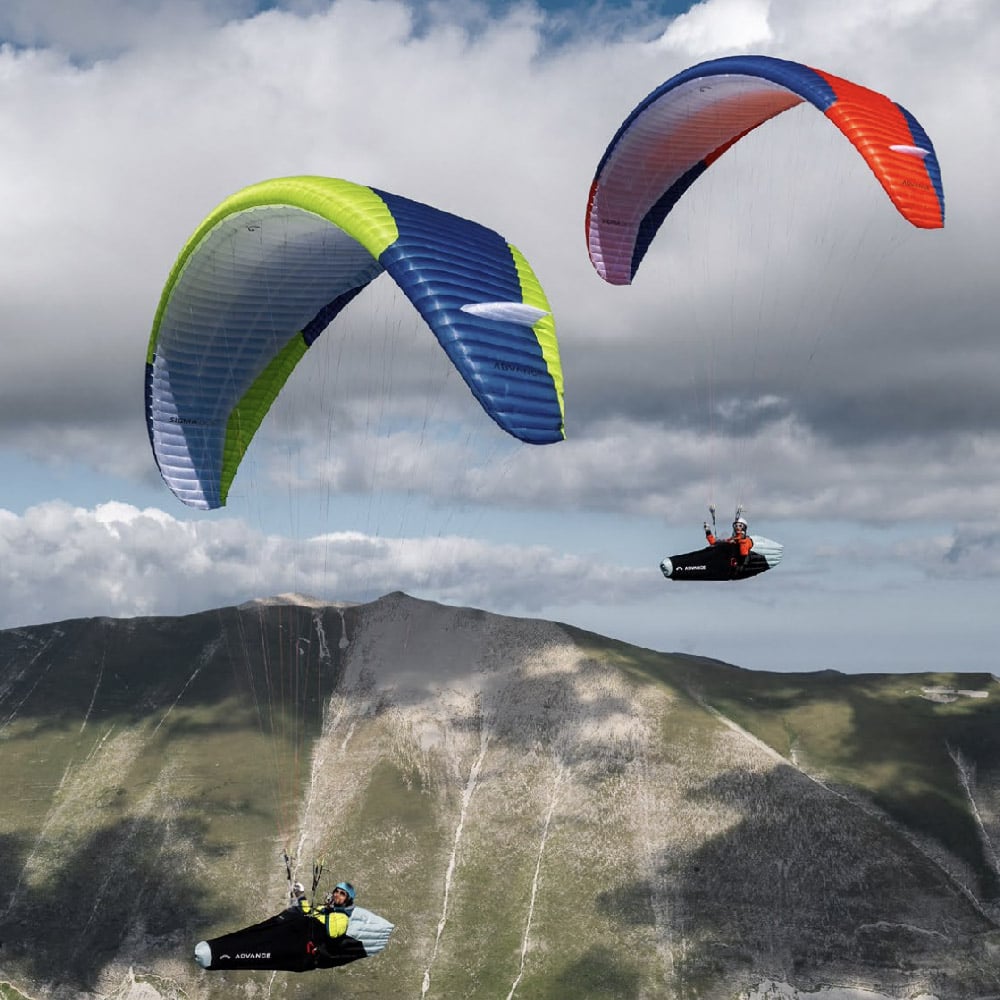


To help guide you on the right path with your first steps into freeflying, we've put together some free general advice on getting started, choosing a school, improving your skills, buying your own equipment and much more.
While paragliding is where most people start, there are lots of different directions your flying can take you later on, from soaring and XC to hike & fly, para-alpinism, speed flying, mini wings, parakites, paramotoring, acro and tandem flying.
On behalf of the whole freeflying community, WELCOME to the wonderful world of freeflight! 😊
NB: We are focused on providing the best service and equipment to our customers so no longer offer training or courses.
Getting started with paragliding
It's simple to fly, but it takes a lifetime to master! You'll need to be fairly fit, adventurous and have free time, but you don't need to be fearless. Caution and careful risk management are traits of good pilots.
Generally the best introduction to flying is a tandem flight (or flights). This could be done before or in conjunction with a taster day or more. Once you're sure free flight is for you, sign up for a full training course.
Tip: Every freeflight school and tandem operation is different. Check them out and ask around before signing up. As with everything in flight, don't base your choice on price. You get what you pay for! Flying is an activity where it's worth spending more for your best experience and safety.
Tandem flights
A tandem paragliding flight is a great way to experience freeflight without first having to learn how to control the paraglider yourself. Your experienced tandem pilot takes care of the launch, flying and landing, while you get to enjoy the view!
Taster days
Paragliding schools usually offer a trial or taster session where you can learn to handle the wing on the ground and get some short, low-level flights. It's a good way to find out whether paragliding is for you before committing to a full course.
Full training courses
Expect around 10–15 days of training to reach the level needed for safe solo flying, although this varies with the weather, the student and the training system.
In the UK, training normally leads to the BHPA Club Pilot level. Other countries have their own licensing systems, with international recognition through the FAI¹, CIVL² and IPPI Card³ Safe Pro rating systems.
Choosing a school
Every freeflight school is different, so it's worth doing a bit of research before signing up. Ask around, talk to local pilots and find out what sort of experience other students have had.
Don't base your choice on price alone. As with everything in flying, you generally get what you pay for!
My country or abroad?
We think it's best to learn in the environment where you'll do most of your flying. You'll get to know the local weather, terrain and flying conditions from the start.
Training abroad can sometimes offer faster progression if you get lucky with the weather, and it can be a great experience. But nowhere is guaranteed to be flyable all the time!
We've flown all around the world and, for most people, we'd recommend doing your main training reasonably close to home, then travelling abroad for additional training and flying once you've got the basics.
Paragliding FAQ
'What about doing it on my own? Am I too old to learn paragliding? What about personal accident insurance?'
For the answers to these and more, check out the Paragliding FAQ.

Buying your own equipment
In freeflight it's incredibly important that you buy the right and best equipment for YOU, personally. You are buying equipment you need to trust with your life, and getting the best gear for you really can make the difference between a great flight and a dreadful one. To stay safe, within reason, and ensure you get maximum enjoyment out of your flying, you need to be sure you're making the right and best decision for YOU. With freeflight equipment one person's perfect dream machine can be a terrible match for another. What's right for someone else might not be for you.
Don't be tempted to rush into buying gear. There's a lot more to it than first meets the eye, and it's all too easy to make costly mistakes. Even for professional full-time equipment specialists like us with a great deal of experience it takes careful consideration to match the individual with the right equipment. Package deals offering training and gear might sound tempting but may unduly limit your choices and not provide you with the best result.
Tip: Flying is an activity in which you really want to avoid making false economies!
To help give you some insight into freeflight equipment, you may find our Gear Guides section helpful, especially our series of articles on choosing the right equipment:
- Choose The Right Paraglider
- Choose The Right Paragliding Harness
- Choose The Right Reserve Parachute
- Choose The Right Flight Instrument
- Choose The Right Connectors

Flybubble
We are freeflight equipment specialists, offering a great range of new and used freeflying gear and exceptional expertise at matching pilots to equipment. Find out more about us, and what we offer
"Thanks so much to Nancy and Carlo at Flybubble. Their friendly and clear-minded approach to matching a person to the wing is a brilliant service. I trust Flybubble implicitly and they have never let me down."
- Flybubble customer Paul Grover

Where Can Your Flying Take You?
Once you've got the basics under your belt, there are plenty of different directions you can take your flying. You don't need to decide now — just enjoy learning and see what grabs you!
Soaring & Cross Country
For many pilots, this is what freeflying is all about: finding lift, staying up and seeing how far you can go. Or simply spending a great afternoon soaring your favourite local site. There's always more to learn.
Hike & Fly
Put the paraglider in your rucksack and go exploring! Hike & fly can be as simple as walking up a local hill for a flight down, or turn into bigger mountain adventures, long-distance flights, bivouacs and races.
Para-alpinism
Take it a step further and combine flying with real mountain objectives. Para-alpinism can involve remote launches, technical terrain and mountaineering, where knowing how to fly is only part of the skill-set.
Mini Wings, Parakites & Speed Flying
Smaller wings offer a completely different feel in the air. They're compact, responsive and can be great fun, but they also demand good control and judgement. They're specialist wings for specialist flying—not simply a shortcut into the sport.
Paramotoring
Add a motor and you can take off from places where you'd never launch a paraglider. Paramotoring offers a very different kind of freedom, with its own equipment, flying techniques and training.
Acro Flying
Once you've mastered the basics, you may want to explore what your wing can really do. Acro takes wing control and dynamic flying to another level, and is best approached gradually with good coaching and plenty of experience.
Improving your skills
Getting your licence is really just the beginning. The fun part is learning to fly better, becoming more confident and gradually working out what sort of flying you enjoy most.
See our Flight Skills section for a range of articles, videos, tips and free tutorials.
Coaching
Good coaching can make a huge difference. Every BHPA club has a coaching team, although they're volunteers and availability can be limited. Some schools and experienced pilots also offer one-to-one coaching.
We know pilots can be strangely reluctant to pay for instruction, but good coaching pays you back in confidence, ability and, ultimately, more enjoyable airtime. We recommend you join a club, seek out the coach, and make friends with the experienced local pilots, who are often more than happy to share their hard-won knowledge.
Tandem training for pilots
Highly recommended! This is probably available from any of your local tandem pilots, if you're prepared to pay the going rate. Flying with an experienced tandem pilot can also be a great way to learn. You can watch what they're doing while feeling what the air is doing, which can be particularly useful for improving your thermalling and soaring skills.
Guided trips
Once you're comfortable flying locally, travelling with your paraglider is one of the great joys of freeflying. Even visiting a new area in your own country can open up a whole new flying experience.
A good guide can help you get the most out of a new area while keeping things progressive and within your abilities.
Safety Training
There are instructors who specialise in doing extreme manouevre training, over water. The main venues are Annecy (France) and Oludeniz (Turkey). "Pilotage" and SIV courses can help you improve your wing control, active flying and understanding of your wing's behaviour in a controlled environment.
Start with our articles on Active Flying.

Cross country leagues
Once you've learned how to fly cross country (XC), the online paragliding XC leagues provide a competitive forum for paraglider pilots. You can learn something by watching what other pilots achieve. We are enthusiastic yet safety-conscious cross country pilots, and in 2015 ended up winning the UK paragliding XC league (Carlo #1 overall, Nancy #1 lady) on sports and XC class rated wings, beating many racing hotshots on their snaky hot ships. 😊
For inspiration, read Flybubble Carlo's summary report on the 2015 UK PG XC season.

Competitions
After building your cross country flying skills, a competition can boost your skills. A competition task makes it possible to compare your decisions with those of others following exactly the same route. In the UK there is the Advance British Club Challenge, a series designed to introduce pilots to competition flying. Simple tasks are set and flying is in a social, supportive environment. Once you've mastered the basics, you can progress to regional and national championships, and ultimately aim for your national team. There's always something going on during the European summer.
Read our Competition Flying Guide
Taking Someone Else Flying — Becoming a Tandem Pilot
Flying tandem is a big step. You're no longer just responsible for yourself—you've got someone else trusting you to make the right decisions too!
Whether you're interested in tandem paragliding, paramotoring, soaring, hike & fly, speed flying or tandem mini wings, the starting point is the same: become a confident, experienced and consistent solo pilot first.
From there, each type of tandem flying has its own challenges, equipment and training.
Tandem Paragliding
The traditional route into taking others flying. Good launch and landing skills, sound judgement and plenty of solo experience are all important.
Tandem Paramotoring
Powered tandem flying brings its own challenges, including managing the motor, extra weight and powered-flight procedures.
Tandem Soaring & Mountain Flying
Flying passengers in the mountains requires strong site, weather and terrain judgement—as well as making sure your passenger is having a good time!
Tandem Hike & Fly
More than just carrying twice the kit up a hill! You'll need to consider the whole adventure, including the route, terrain, conditions and your passenger's ability.
Tandem Speed Flying & Mini Wings
A highly specialist area. Experience in both tandem flying and the discipline itself is essential before considering taking someone else along for the ride.
Remember: Being a good solo pilot doesn't automatically make you ready to fly tandem. Taking another person flying is a big responsibility - so take your time, get the right experience and seek out good specialist training.
Getting the Right Kit
As your flying develops, so will your equipment needs. The right kit for relaxed weekend flying isn't necessarily the right kit for hike & fly, XC, paramotoring or anything else.
That's where we - Flybubble - come in! 😊
We can help you understand the options and find the equipment that's right for you and the flying you actually want to do.

What's Next?
If you're completely new to freeflight, start by finding a good school and getting some proper instruction. Take your time, enjoy the learning process and don't worry about trying to do everything at once.
There's plenty of time to discover what kind of flying you enjoy.
Welcome to freeflight! 😊
Footnotes
¹ FAI - Federation Aeronautique Internationale, the World Air Sports Federation.
² CIVL - Commission Internationale de Vol Libre, the Hang Gliding and Paragliding Commission of FAI.
³ IPPI Card - IPPI stands for "International Pilot Proficiency Identification". The IPPI Card provides a standard reference by which all national rating programs may be compared. Safe Pro Para for paragliding; Safe Pro Delta for hang gliding.
Brought to you by Flybubble
Like what we do? The best way to thank and support us is to buy gear from us and recommend us to others.